
Arizona Monsoon Season: How to Prepare Your Site for Flash Floods

Monsoon season can turn a calm jobsite into a water problem in minutes.
If you manage a site in southern Arizona, you already know the stress of trying to keep people safe, protect the work, and avoid a repair bill you did not plan.
We wrote this guide at Eagle Rock Excavating because many owners and managers ask the same things every summer.
What should you check before the Arizona monsoon starts? What should you fix first if you only have time for a few moves? How do you keep work moving when storms, dust storms, and fast runoff start showing up?
Arizona’s monsoon season is officially June 15 through September 30, and it often brings thunderstorms, strong winds, heavy rain, and localized flash flooding.
Arizona Monsoon Basics You Can Use Without Guessing the Forecast
What “Arizona Monsoon” Means in Plain Words
The Arizona monsoon is the seasonal shift that brings more humidity and a higher chance of thunderstorms in the Southwest.
The official season window is June 15 through September 30.
Why Flash Floods Can Hit Far From the Storm
One reason flash floods catch people off guard is distance.
The National Weather Service warns that flash flooding can happen many miles away from a thunderstorm when runoff flows into valleys and deserts.
That matters for sites near washes, slopes, or channels.
You can have blue sky overhead and still see water moving fast through a low area.
What “Flash Flood” Means
A flash flood is fast-rising water triggered when heavy rainfall overwhelms the ground or drainage paths.
NOAA explains flash floods can form quickly and leave little time to react.
What Should You Check First Before Flash Floods During the Arizona Monsoon
If you only do one thing, walk the site like water would. Not like a person would.
Water does not care about your curb line, your walkway, or your tenant entry.
1) Find the Flow Paths
Look for:
- Slopes pointing toward doors, loading zones, or low parking rows
- Areas where runoff cuts channels in dirt or landscape
- Curbs that trap water with no outlet
- Low corners near walls or fences that act like bowls
2) Spot Ponding and Soft Ground
Ponding is not only a nuisance.
It often signals a grading issue, a clogged inlet, or a low spot that will hold water longer after storms.
3) Check Inlets, Grates, and Outlets
Before storms stack up, remove trash and sediment.
A small blockage can turn a normal rain into a site shutdown.
4) Look for Cracking Near Low Spots
Cracks near ponding zones matter because water finds the easiest path downward.
If runoff keeps returning to the same area, you often see repeat damage.
Southern Arizona Flash Flood Prep That Protects Access and Daily Use
In southern Arizona, the problem is not only “rain.”
It is how fast runoff concentrates and how little time you have to react.
Keep Access Routes Working
Decide, now, what routes should stay open during storms:
- Tenant entry paths
- Fire access routes
- Delivery and loading lanes
- Emergency vehicle approaches
If runoff crosses these, you need a plan for where water goes and how it gets there.
Reduce “Surprise” Water From Nearby Areas
A common issue is runoff arriving from off-site slopes or streets.
If you share a boundary with higher ground, water will find you.
This is where grading and drainage work matter more than surface patching.
How We Talk About This at Eagle Rock Excavating
When we review a site for monsoon prep, we focus on simple questions:
- Where does water enter the property?
- Where should it exit?
- What blocks it right now?
- What gets undermined when water sits too long?
We then match fixes to the site’s risk level and schedule, not just to what feels urgent.
Dust Storms in Southern Arizona: What To Do When Visibility Drops
 Monsoon season is also dust season.
The Arizona Department of Transportation warns dust storms can quickly reduce visibility and tells drivers to avoid driving into dust, then “Pull Aside, Stay Alive.”
Dust Storm Basics for Site Managers
You do not need a long safety manual. You need a few clear calls:
- Slow site traffic early when dust builds
- Pause backing and tight equipment moves when visibility drops
- Keep gate areas clear so vehicles can stage safely
- Communicate stop points so people do not guess
If your property includes a roadway frontage, also remember dust storm crashes often happen when drivers stop in travel lanes.
ADOT guidance stresses pulling completely off the roadway and turning lights off once parked.
Small Towns in Southern Arizona: Why Flash Flood Prep Looks Different
Small towns in southern Arizona often have a few extra complications:
- Fewer alternate routes if a low crossing floods
- Limited storm drainage in older areas
- Rural edges where runoff carries more sediment
- Longer response times for material deliveries after storms
What Helps Most in Smaller Communities
- Clear the single inlet that protects the main parking area
- Fix the one low spot that always ponds near the entry
- Add a simple, planned flow path so water stops cutting new channels
- Stage materials where runoff will not soak or bury them
These are not glamorous fixes, yet they prevent the problems that ruin schedules.
Rainwater Harvesting System and Water Harvesting System Options
You will hear more talk about capture and reuse, especially on sites with landscaping goals or water cost concerns.
A rainwater harvesting system can range from simple landscape features that slow and sink runoff, to tanks that store water.
What a Rainwater Harvesting System Can Mean on a Site
It can mean:
- Shaping grades so runoff flows into planted basins
- Adding berms and swales that slow water
- Directing roof runoff into storage, when design allows
Water Harvesting System Reality Check
A water harvesting system is not the right fit for every property.
It depends on soil, grading limits, local rules, and what you are trying to protect.
Treat it as an option, not a promise.
Do you want to reduce ponding and erosion, or do you want storage for later use?
Storm Drainage and Grading: What Prevents Ponding During the Arizona Monsoon
When flash flooding hits, the winners are sites with clear flow paths and drainage that stays clear.
Grading Basics
Grading is how the ground is shaped so water goes where you want.
During monsoon season, bad grading shows up fast.
Signs grading is working poorly:
- Water flows toward buildings
- Water crosses main drive lanes
- Sediment piles up behind curbs
- Low corners stay wet long after storms
Storm Drainage Basics
Storm drainage is the system that collects and moves runoff away.
During monsoon season, the most common “failure” is not a broken pipe.
It is a blocked inlet, a buried outlet, or sediment build-up.
How We Handle It in the Field
When grading or drainage is the root issue, patching the surface alone turns into repeat calls.
We look at the cause chain, then plan the fix so water stops returning to the same weak point.
This fits our scope because Eagle Rock Excavating handles storm drainage excavation, grading, and related site work as part of full site development.
Trench Shoring and Trench Box Basics During Monsoon Work
Monsoon season can force tight work windows.
If you are opening ground for drainage or utility work, trench safety decisions matter more when soils get wet or unstable.
What “Trench Shoring” Means
Trench shoring is a method used to support trench walls and reduce cave-in risk.
OSHA explains protective systems are required for trenches five feet deep or more unless the excavation is in stable rock, and deeper trenches can require engineered systems.
What a “Trench Box” Means
A trench box (also called a trench shield) is a protective system workers use inside a trench.
OSHA describes trench boxes or shields as a protective approach within excavation safety guidance.
Why Wet Season Timing Changes the Conversation
Wet soil can change quickly.
Water can seep into a trench wall, soften it, and raise risk.
If trench work is part of your monsoon plan, do not treat protective systems as optional details.
How We Speak About This Without Being Dramatic
When trench work is required, we plan the sequence so excavation time stays controlled, protective systems are used correctly, and inspections stay consistent with OSHA excavation standards.
What Should You Do This Month to Prepare for Flash Floods
Quick Wins That Often Prevent Big Problems
- Clear inlets and outlets, then recheck after the first storm
- Mark ponding spots with paint so you can track changes
- Fix broken curb cuts or blocked flow paths
- Stabilize dirt edges where runoff cuts channels
- Keep material stockpiles away from low areas and washes
If You Manage Tenants or Public Access
- Communicate which areas flood first
- Place temporary barriers where water moves fast
- Plan alternate walking routes so people do not step into runoff
The National Weather Service warns flash flooding can be life-threatening and encourages moving to higher ground during warnings.
Construction Scheduling in Southern Arizona During Monsoon Season
You cannot control storms. You can control exposure.
What We Suggest When Schedules Are Tight
- Avoid leaving open excavations exposed heading into high storm risk days
- Finish grading and drainage tie-ins before placing final surfaces
- Plan “pause points” so a storm does not ruin fresh work
- Stage repair materials so you are not scrambling after damage
Why “Fast” Work Still Must Be Clean Work
Fast does not mean rushed. Fast means a clear plan and fewer re-dos.
This is where a contractor who handles grading, drainage, and paving under one scope can help keep sequencing clean.
After the Storm: How To Assess Pavement and Drainage Damage
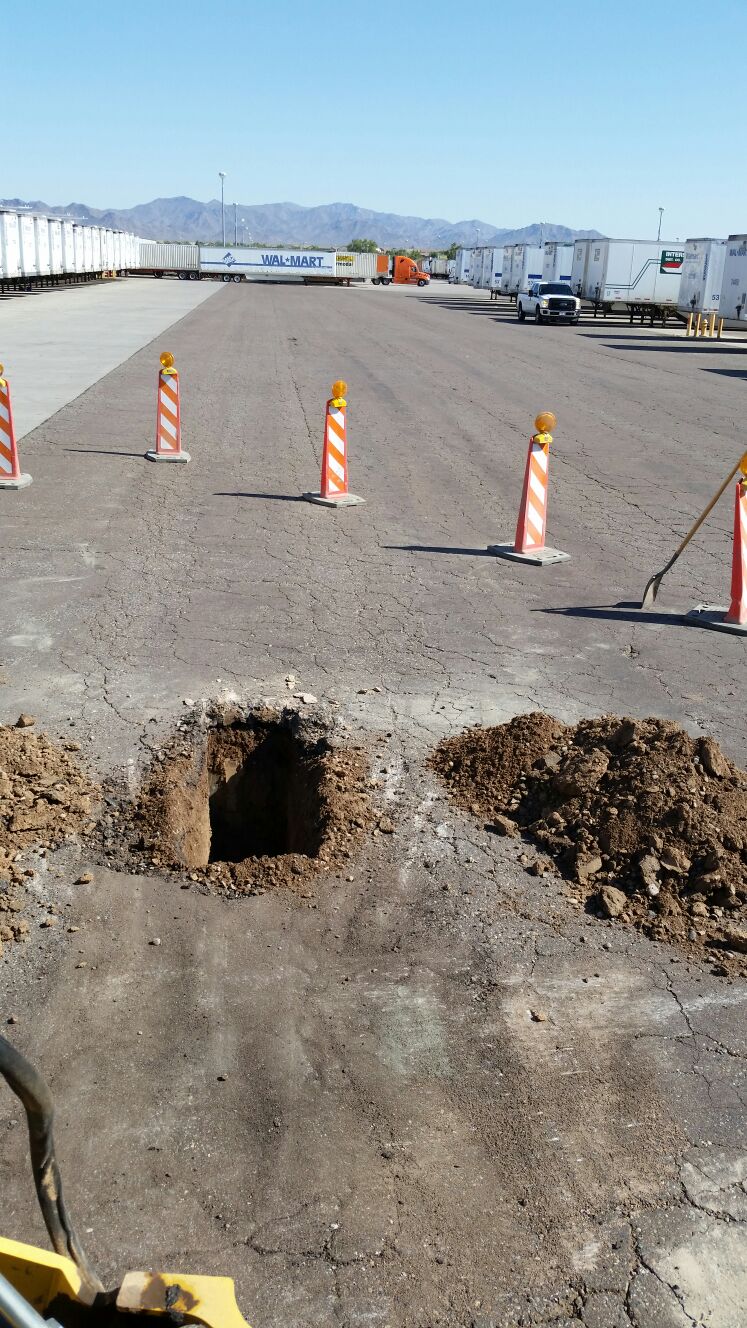 The hours after a storm are the best time to learn what your site really does.
What To Look for in the First Day
- New sediment fans near inlets
- Fresh erosion channels in dirt or landscape
- Ponding zones that did not exist before
- Cracks that widened near low spots
- Sink areas near edges or older patches
What To Photograph
- The same low spots from the same angles
- Any overtopping near curbs
- Any water lines on walls or fences
- Any debris packed into grates
How We Use This Info
When you call Eagle Rock Excavating after storm damage, photos and notes speed up diagnosis.
We can see whether the site is dealing with surface symptoms or a flow-path issue that will repeat.
People Also Ask About Arizona Monsoon and Flash Flood Prep
When Does Arizona Monsoon Season Start and End
Arizona’s monsoon season runs June 15 through September 30.
Can Flash Flooding Happen Without Rain on My Site
Yes. The National Weather Service warns flash flooding can occur many miles from a thunderstorm as runoff flows into valleys and deserts.
What Should You Do When You See Dust Storms on the Road Near Your Site
ADOT guidance says to avoid driving into dust.
If you must stop, pull completely off the road, turn off lights, and stay in the vehicle.
What Is Trench Shoring and When Do You Use a Trench Box
Trench shoring supports trench walls.
A trench box shields workers inside a trench.
OSHA explains protective systems are required in many trench conditions, including trenches five feet deep or more unless stable rock.
Is a Rainwater Harvesting System the Same as a Water Harvesting System
People use both terms in similar ways.
In plain terms, both refer to capturing and managing rainwater, either for soaking into landscape areas or for storage.
The right choice depends on site goals, grading limits, and local conditions.
Prep Your Site Before Monsoon Season With Eagle Rock
Preparing your site is less about predicting storms and more about removing the weak points water finds every time.
In Arizona, the most reliable approach is routine inspection, simple fixes early, and clear plans for access and drainage after storms.
If you are considering a rainwater harvesting system or water harvesting system, treat it as an option that depends on site goals and conditions, not a one-size answer.
Contact our team at Eagle Rock Excavating today, and let us help you prep your site before monsoon season arrives.


