

Excavating and drainage play an essential role in keeping your property safe, stable, and functional.
Without proper grading, even minor drainage issues can escalate into significant problems, affecting both the appearance and functionality of your land.
With the right approach, you can protect your property from the adverse effects of poor drainage and excavation.
How Does Proper Grading Protect My Property?
Understanding Proper Grading
Proper grading is the foundation of effective water management on any property.
It involves shaping the land by either removing or adding soil to ensure the terrain has the right slope to guide water away from critical areas, such as your home’s foundation or walkways.
Typically, a 5% slope, which is about six inches of fall for every 10 feet of distance, is recommended to direct water safely away from buildings.
This process helps prevent water from pooling around your home or other structures, reducing the risk of costly damage to foundations and basements.
In addition to safeguarding the structural integrity of your property, proper grading plays a role in managing water flow in landscaping.
Grading ensures that water does not accumulate in areas where it could damage plants, erode soil, or create slippery surfaces.
A well-graded yard will complement your landscape design while maintaining functionality, supporting the health of your lawn, trees, and garden beds.
Why Proper Grading Matters
Proper grading is critical in preventing water-related issues that can compromise your property’s stability.
Water accumulation around foundations can lead to erosion, cracking, and eventual structural failure.
Over time, water seeps into small cracks, weakening the material and leading to foundation damage that can cost tens of thousands of dollars to repair.
Water damage is responsible for more than 90% of foundation failures, underscoring the importance of managing water flow through proper grading.
How Excavating Prepares for Proper Grading
Excavating for Effective Drainage
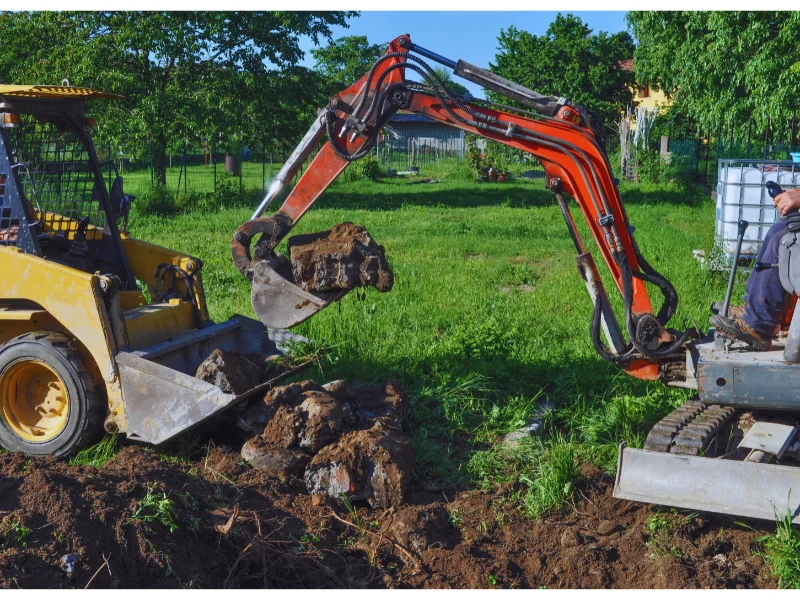
Excavation is a vital first step in ensuring that the land is ready for proper grading.
It clears the site and allows contractors to shape the land effectively, setting the groundwork for proper drainage and long-term stability.
This process not only involves digging but also reshaping the land to prepare it for a slope that will effectively divert water away from key structures.
Inadequate excavation can lead to improper slopes, which may cause water to pool around your home or other critical areas, increasing the risk of erosion and flooding.
Excavation must also consider the type of soil on your property. Different soil types, such as clay, sand, or loam, absorb and manage water differently.
Proper excavation practices account for this by adjusting the slope and drainage features based on how the soil interacts with water.
When done right, this process ensures that the land is ready to be shaped, allowing the grading process to guide water away from your property efficiently, reducing the risk of long-term damage.
Key Steps in Proper Grading for Effective Drainage
Assessing the Site
Before you even begin the grading process, you need to get to know your land before making any big changes.
You’ll want to take a close look at the current slope of the property, how water moves during rain, and any areas where water might already be pooling.
A thorough site assessment helps create a grading plan that fits your property’s unique needs, ensuring that water flows where it’s supposed to and doesn’t cause future problems.
Consult with a professional contractor who understands drainage patterns and soil behavior to create an improvement in setting up your grading plan the right way.
Implementing the Grading Plan
This stage involves actually moving soil to create a slope that directs water away from critical areas, like your home’s foundation or other important structures.
The key here is to ensure that the slope is gentle yet effective—too steep, and you might cause erosion; too flat, and water will stagnate.
The goal is to create a steady flow of water away from your property, so you avoid issues like water damage, erosion, and foundation problems in the future.
Regular Maintenance and Monitoring
Regular maintenance is a must to ensure your property’s drainage system continues working as expected.
Over time, natural elements like rain, wind, and plant growth can subtly change the landscape, and these changes can affect how water drains.
Keep an eye out for signs of erosion, water pooling, or areas where water isn’t draining as smoothly as it should.
If you see any issues, addressing them quickly will save you from dealing with more extensive and costly repairs down the road.
What are The Common Problems with Improper Grading and Excavating?
Erosion and Water Damage
When the land isn’t shaped properly, water doesn’t flow as it should, often pooling around structures or in low-lying areas.
Over time, standing water wears away the topsoil, weakening the ground and leading to erosion.
As erosion progresses, the structure of your property becomes compromised, leading to potential long-term damage.
According to the USDA Natural Resources Conservation Service, poor grading can accelerate soil erosion, especially during heavy rain.
Foundation Issues
One of the most serious consequences of improper grading and excavation is damage to your foundation.
As the soil expands and contracts with moisture levels, it causes the foundation to shift or settle, leading to cracks, bowing walls, and, in extreme cases, structural failure.
This can be a homeowner’s nightmare, as foundation repairs are often costly and complex.
In grading the land properly, you can prevent water from pooling around your foundation and protect the long-term stability of your home or other structures.
Flooding and Drainage Problems
When water can’t drain properly, it collects in low spots, creating puddles that can damage your landscaping, driveways, and even seep into your basement or crawl space.
This is not only unsightly but can also lead to further erosion, mold growth, and structural problems if left unchecked.
In some cases, poorly graded land might even direct water toward your home instead of away from it, significantly increasing the risk of flooding during heavy rain.
To avoid these problems, proper grading is critical. It ensures that water flows away from your property, protecting both the functionality and aesthetics of your outdoor space.
It’s also worth noting that proper grading plays a role in environmental sustainability, as it helps reduce water runoff and prevents soil degradation over time.
Protect Your Property with Eagle Rock Excavating
Excavating and drainage are more than just technical steps—they’re vital for keeping your property safe and stable.
Proper grading plays a key role in managing water flow, helping to avoid common issues like erosion, flooding, and foundation problems.
When you choose a contractor who truly understands the importance of these processes, you’re investing in the long-term health of your property.
Here at Eagle Rock Excavation, we specialize in ensuring that your grading and excavation are done right the first time.
We’re here to guide you through every step, making sure that your project not only meets but exceeds your expectations.
With our expertise, you can rest easy knowing your property is protected and ready for whatever comes next.
Let us help you get it right—because when it comes to your home, every detail matters.
Contact us today to learn how our expert grading and excavation services can protect your property and ensure lasting stability.


