
Asphalt pavement heat damage is something we see on job sites across Southern Arizona every single year, and it is more serious than most property owners realise.
Tucson and the surrounding region regularly record summer temperatures above 100°F, and the asphalt surface itself can reach temperatures well above that. Over time, that sustained heat breaks down the materials that hold pavement together, leading to cracking, rutting, and premature failure.
The damage does not happen overnight, but it compounds season after season if the pavement is not properly maintained. Understanding how heat affects asphalt helps you make smarter decisions about maintenance, timing, and when repairs are actually needed.
What Actually Happens to Asphalt When Temperatures Get Extreme?
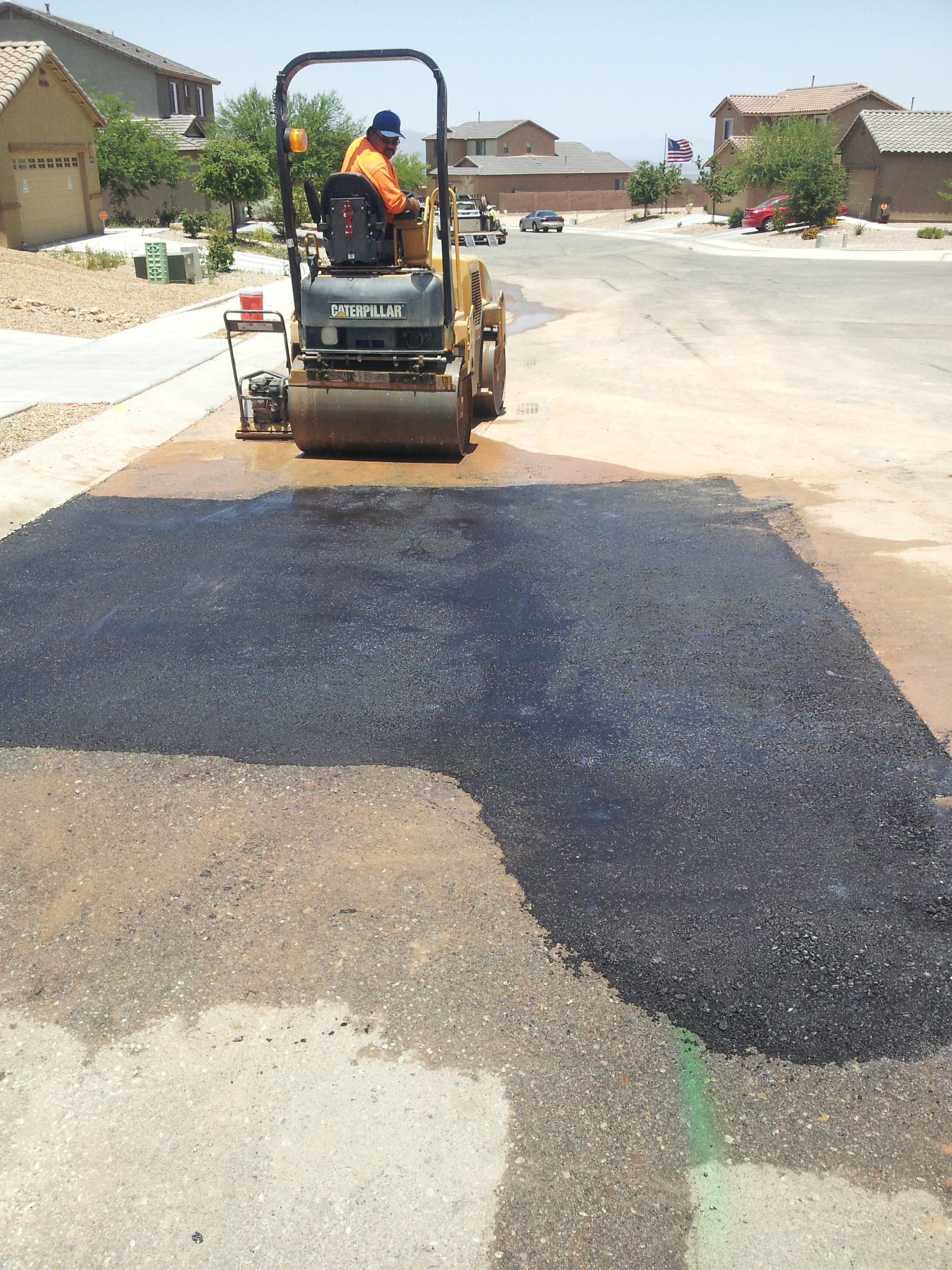
Asphalt is made up of two main components: aggregate, which is the crushed rock and sand, and bitumen, which is the binder that holds everything together. Heat affects the bitumen directly. At high temperatures, the binder softens and loses its ability to hold the aggregate in place under the pressure of vehicle loads.
When this happens repeatedly over many summers, the binder gradually hardens and becomes brittle through a process called oxidation. Oxidised asphalt cracks more easily, loses its flexibility, and starts to break apart under traffic and temperature cycling.
According to the Federal Highway Administration, thermal cracking and oxidative hardening are among the leading causes of pavement deterioration in hot climate regions.
How Does UV Radiation Contribute to Asphalt Pavement Heat Damage?
Heat and UV radiation work together to accelerate asphalt pavement heat damage in ways that are easy to underestimate. UV rays break down the chemical bonds in the bitumen binder at the surface level, causing it to oxidise and lose its dark colour. That is why older untreated asphalt turns grey rather than staying black.
Once the surface oxidises, it becomes less waterproof and more porous. Water from monsoon rains can then enter the pavement structure through surface pores and small cracks, weakening the base from below.
The Arizona Department of Environmental Quality notes that Arizona receives some of the highest levels of solar radiation in the United States, which makes this process faster here than in most other states.
What Is Rutting and Why Does It Happen in Hot Weather?
Rutting is one of the most visible signs of heat-related asphalt pavement damage. It appears as linear depressions or grooves in the pavement surface that follow the path of vehicle wheels. Rutting happens when the asphalt binder softens enough under heat that the pavement deforms under repeated traffic loads rather than springing back.
In commercial parking lots and driveways that carry heavy vehicles, rutting can develop quickly during summer months when surface temperatures are at their peak. Deep ruts collect water during monsoon season, which accelerates base deterioration and makes the problem significantly worse.
If rutting is visible on your pavement, it is a sign that the mix design or the pavement thickness may not be adequate for the loads and climate conditions it is dealing with.
How Does the Heat and Monsoon Cycle Make Things Worse?
Southern Arizona has a climate pattern that is particularly hard on asphalt. Intense heat through late spring and summer is followed by the monsoon season, which brings sudden heavy rainfall to ground that has been baked dry for months. That combination creates a damaging cycle that is worth understanding.
Here is how the heat and monsoon cycle breaks down pavement over time:
- Heat softens and oxidises the binder during summer, making the surface more brittle and porous going into monsoon season
- Monsoon rainfall enters existing cracks and surface pores in pavement that has been dried out and weakened by months of heat exposure
- Water saturates the base layer beneath the asphalt, reducing its load-bearing capacity and causing soft spots to develop
- Traffic loads on a wet, weakened base cause the surface above to crack, sink, or develop potholes
- The pavement dries out again after monsoon season ends, but the structural damage from water infiltration remains and worsens the following summer
We see this cycle play out on neglected lots across Southern Arizona every year. The property owner notices the damage after monsoon season, but the conditions that allowed it started months earlier during the summer heat.
What Are the Early Warning Signs of Heat-Related Pavement Damage?
Catching asphalt pavement heat damage early gives you more options and lowers the cost of fixing it. By the time potholes and deep cracking are visible, the damage has usually been building for several seasons. These are the earlier indicators worth paying attention to:
- Grey or faded surface colour means the bitumen binder has oxidised and lost its dark pigment. This is one of the first visible signs that the surface is hardening and becoming brittle, and it is the ideal time to apply a seal coat before the deterioration goes further.
- Longitudinal cracking runs parallel to the direction of traffic and is typically caused by thermal stress and binder hardening. It signals that the surface is losing its flexibility and starting to pull apart under the repeated expansion and contraction of heat cycling.
- Transverse cracking runs across the pavement surface and is also driven by thermal movement. In Southern Arizona, where temperatures swing significantly between day and night and season to season, transverse cracks can develop even on pavement that is relatively young.
- Fine surface cracking that has not yet spread into a larger pattern is the ideal stage to intervene. Crack sealing at this point stops water from entering the pavement structure and can extend the life of the surface by several years without the need for more significant repairs.
- A dry, ravelling surface where small pieces of aggregate are breaking away from the top layer is a sign that the binder can no longer hold the mix together. This stage moves quickly once it starts, and it usually means a more substantial repair or repave is not far off.
How Can Property Owners Reduce Heat-Related Pavement Damage?
 There is no way to eliminate the effects of Southern Arizona’s climate on asphalt, but there are practical steps that slow the damage significantly. Proactive maintenance is far less expensive than reactive repairs, and the timing of that maintenance matters.
Seal coating is the most effective surface-level protection against UV oxidation and heat damage. Applied to sound pavement every two to three years, it slows the oxidation process and keeps the surface sealed against water infiltration.
For new pavement, waiting six to twelve months before the first seal coat allows the asphalt to cure properly, then starting a regular maintenance schedule from that point keeps the surface in much better condition over its full lifespan.
Drainage is the other major factor. Pavement that drains properly after monsoon rain does not hold water against the surface or allow it to pool and infiltrate cracks.
When we assess a site for repaving or maintenance, we always look at drainage as part of the overall condition review. Poor drainage accelerates heat-related damage significantly because water compounds what the heat has already started.
Does Asphalt Mix Design Matter in a Hot Climate?
It does, and it is something we factor into every paving project we take on in Southern Arizona. Not all asphalt mixes perform the same way in extreme heat. Mixes with a softer binder grade that might work well in a cooler climate can rut and deform quickly in Tucson’s summer temperatures.
The Arizona Department of Transportation uses performance-graded binder specifications that account for local climate conditions, including the high pavement temperatures experienced across Arizona.
For commercial and high-traffic applications, specifying the right binder grade for the expected temperature range is one of the most important decisions in a paving project. Getting that right from the start reduces the risk of premature heat-related failure and extends the pavement’s useful life.
How Long Should Asphalt Last in Southern Arizona’s Heat?
With proper installation and regular maintenance, well-designed asphalt pavement in Southern Arizona should last between 15 and 25 years. Pavement that receives no maintenance and is installed with an inappropriate mix for the climate can deteriorate significantly within 10 years.
The difference between those outcomes is almost entirely about how the pavement is maintained and how well the original installation was specified.
According to the National Asphalt Pavement Association, asphalt is the most recycled material in the United States, and properly maintained asphalt surfaces can be rehabilitated and overlaid rather than fully replaced, which reduces both cost and material waste. In a hot climate, getting on a regular maintenance schedule early in a pavement’s life is the single most effective way to maximise that lifespan.
Protect Your Pavement Before the Next Summer
Asphalt pavement heat damage is predictable, and that means it is largely preventable with the right maintenance approach.
If your pavement is showing signs of oxidation, cracking, or surface wear, now is the right time to have it assessed before another summer accelerates the damage further.
At Eagle Rock Excavating, we assess and maintain commercial and residential pavement across Southern Arizona, from seal coating and crack sealing to full repaving when the situation calls for it. Visit our services page to see what we offer, or browse our blog for more practical information on pavement maintenance in a hot climate.
Contact our team to arrange a site assessment and get a straight answer on what your pavement needs.


