
Aging water and sewer lines can catch property owners off guard.
When a main fails, you deal with service outages, pavement damage, safety hazards, and costly repairs.
You want clear, practical information about how excavation crews work around old pipes, and what steps keep people and nearby utilities safe during the job.
Eagle Rock is going to tell you how excavation companies in Tucson AZ approach utility repair and replacement, what safe digging services look like, and how precision excavation services limit disruptions and cost.
How Aging Water Lines Affect Homes in Southern Arizona
 Many U.S. water systems include pipes that are more than 50 years old, and a rising wave of breaks has increased repair work nationwide.
Research shows roughly a third of water mains across North America exceed 50 years in age, which raises the chance of leaks and breaks that require excavation and replacement.
Local systems, including those near Tucson, face similar pressures from material aging, shifting soils, and changing climate patterns that alter groundwater and runoff behavior.
Planning ahead for utility excavation prevents emergency digs and helps manage public costs and service interruptions.
How Excavation Companies in Tucson AZ Handle Pre-Dig Safety Planning
Good excavation work starts long before machines arrive.
Preparation focuses on mapping, permits, and safety planning so crews can expose aging lines correctly with limited risk.
Mapping and Records Review
First, crews gather available maps, as-built plans, and utility records.
Public utilities, municipal GIS, and prior project files give a sketch of where water and sewer lines run.
These records rarely tell the whole story, but they let contractors plan the work and coordinate with local utility owners and city crews.
Call-Before-You-Dig and Positive Response
Before digging, crews contact local one-call systems.
Calling 811 or using the Arizona one-call process triggers marking of underground lines so crews know where live utilities lie.
Damage prevention data show that following these steps reduces utility strikes and the large repair costs that follow.
Excavation companies in Tucson AZ make this contact standard practice before any trenching or exposure work.
Permitting and Inspector Coordination
Most water and sewer replacements require permits and inspector sign-offs.
Excavation firms work with municipal inspectors to confirm the scope, materials, and testing plans before work proceeds.
For public projects, this coordination is often mandatory and it helps keep the job on schedule with fewer surprises.
Safe Dig Steps Used for Older Utility Lines
When you hear safe dig services, think of a layered safety plan that reduces surprises and protects crews, the public, and other utilities.
Positive Identification and Hand Excavation
Even when maps show pipe locations, crews often use soft excavation methods around the utility like hand digging, vacuum excavation, or air excavation to reveal the exact location and condition of pipes without cutting or nicking them.
Vacuum excavation is particularly useful in tight urban areas because it removes soil precisely and leaves minimal surface disturbance.
That method reduces the chance of accidental strikes and speeds up accurate repairs.
Utility Locates and Tolerance Zones
Marked utility lines create a “tolerance zone” that crews respect.
Within that zone, mechanical digging is limited; hand or vacuum excavation is common until the utility is exposed and assessed.
These practices come from damage prevention guidance and industry best practices adopted across the U.S.
Documentation and Positive Response Follow-Up
After locating, crews document the exposed utilities and update site drawings so future work has a better record.
This positive response loop helps reduce repeat strikes and supports safer future excavation underground utilities.
OSHA Rules and Trench Safety That Guide On-Site Work
Working near water and sewer lines often means trenching, which carries well-known hazards.
Federal rules set baseline safety steps that every contractor must follow.
OSHA requires protective systems for trenches 5 feet deep or greater unless a competent person judges the excavation to be safe without them.
Protective systems include sloping, benching, shoring, and shielding.
Ladders or safe egress are mandated when trenches reach 4 feet in depth so workers can exit quickly.
These standards apply to most urban utility excavation work and shape how excavation companies in Tucson AZ plan trenching and shoring for aging line repairs.
Precision Excavation Services for Careful Pipe Exposure and Repair
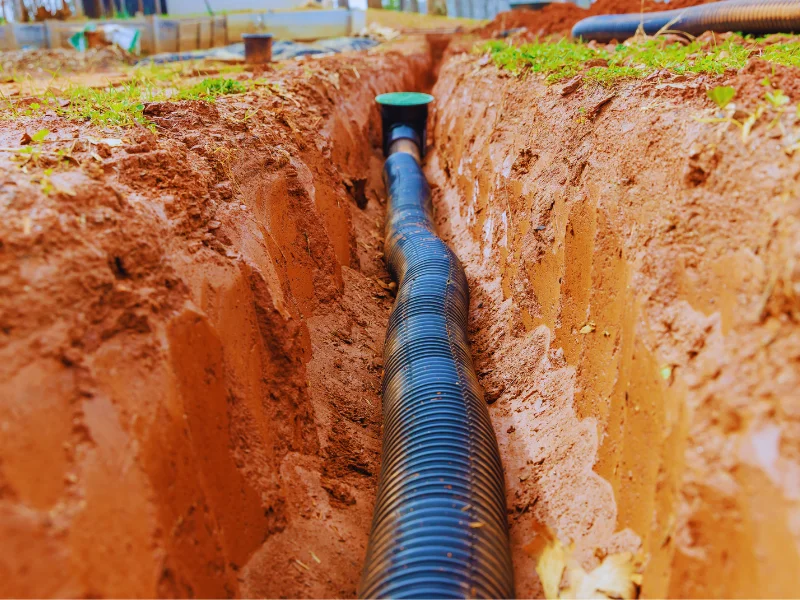 When lines are old, brittle, or close to other utilities, precision matters.
Precision excavation services combine careful planning, specialized equipment, and trained crews to limit collateral damage.
Vacuum Excavation and Daylighting
Vacuum excavation, sometimes called daylighting, removes soil with a hydraulic or air vacuum and prevents blade contact with the utility.
It’s ideal for exposing pipe joints, valves, and service connections without risk.
Projects that use vacuum methods tend to move faster into inspection and repair because crews can see the exact problem without additional risk.
Micro-Trenching and Selective Removal
For targeted repairs — such as replacing a short run of pipe beneath asphalt — micro-trenching reduces surface disruption and lowers the restoration footprint.
By removing only the soil immediately above the pipe, crews avoid unnecessary demolition of pavement or landscape features.
Integration With CCTV, Flow and Pressure Tests
Once the pipe is exposed, excavation underground utilities crews often coordinate inspections such as CCTV for sewers or pressure tests for water mains.
These tests confirm the exact failure mechanism and guide the repair method chosen, even if it’s pipe replacement, section replacement, or a trenchless repair option.
What Happens During Water and Sewer Line Replacement
You can expect a predictable sequence when a utility requires work: planning, locate, expose, repair or replace, test, backfill, and restore.
Here’s how that usually plays out on a municipal or private project.
- Project kickoff with scope, permits, and maps. Contractors coordinate with municipal inspectors and utility owners.
- Call 811 and obtain positive response marks for known utilities.
- Use vacuum or hand excavation to expose the pipe while documenting its condition.
- Confirm the repair path with CCTV or pressure testing, then remove the failed section.
- Replace the pipe section or upgrade material as required. Modern replacements often use ductile iron, HDPE, or PVC depending on pressure and longevity needs.
- Perform pressure or leak tests, then backfill with controlled materials and compaction.
- Restore surface pavement, sidewalks, and landscaping to match pre-work conditions.
Why Coordination With City Crews and Utilities Matters
Many failures happen in older neighborhoods where utilities cluster close together.
City crews, utility owners, and contractors must coordinate timing, traffic control, and inspection windows so service outages are minimized and public safety is preserved.
Close coordination also speeds permit approvals and helps secure the right resources, like traffic control, for larger projects.
Tucson’s One Water planning and utility documents reflect an emphasis on resilient system upgrades and coordination with contractors and local stakeholders.
Common Risks During Underground Utility Work
 Working around old lines brings several hazards: unexpected voids, corroded fittings, joint failures, and adjacent utility damage.
These risks are managed through planning and safe digging practices.
- Unexpected conditions. Crews expect the unexpected and prepare contingency plans for items like undocumented laterals. That means access to alternative materials and a clear chain for municipality notification.
- Adjacent utilities. When power, gas, telecom, and water lines sit close together, crews use vacuum excavation and hand exposing to protect the adjacent systems.
- Trench cave-ins. Shoring and sloping protect crews inside trenches, and daily inspections are common whenever excavations remain open. OSHA rules guide protective measures and daily competent person checks.
How You Can Check That Work Will Be Done Safely And Well
If you are managing a project or hiring a contractor, ask about these items before work begins:
- Will the crew call 811 and follow positive response marks? This is nonnegotiable for safe digging practices.
- What soft-excavation methods will be used near utilities, such as vacuum excavation?
- How will trench safety be implemented in line with OSHA rules for trenching and excavation?
- Will the contractor coordinate inspections and permits with municipal crews? Proper coordination reduces delays and adds transparency.
Asking these questions helps you evaluate contractors and confirms that safe dig services and precision excavation services are part of the plan.
How Eagle Rock Excavating Handles Excavation
Our team provides utility excavation, trenching, shoring, and precision excavation services for water and sewer upgrades across Southern Arizona.
The company follows safe digging practices and uses vacuum excavation when needed to expose mains without harming adjacent utilities.
When trenches are required, our crews follow OSHA trenching rules for protective systems and egress, and they coordinate with city inspectors on testing and restoration.
We often work on projects that call for careful exposure of aging lines, followed by pressure or CCTV testing, pipe section replacement, backfill with compaction testing, and pavement repair.
Request a Consultation for Aging Water and Sewer Line Projects
Aging water and sewer lines increase the need for careful, coordinated utility excavation.
If you need utility excavation or have questions about replacing an old water or sewer line, Eagle Rock Excavating can coordinate safe digging practices with precision excavation services and support your local project.
Contact our team to request a quote and discuss how utility excavation can be handled on your next project.


