
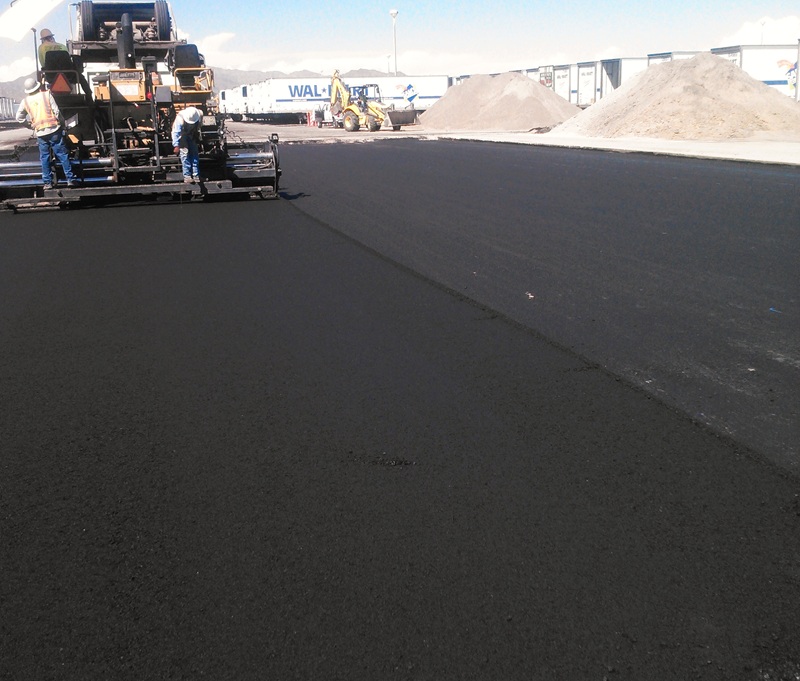
Asphalt paving lifespan is one of the most common questions we get from commercial and residential property owners across Southern Arizona.
Tucson’s climate is among the most demanding in the country for paved surfaces, with intense UV radiation, temperatures that regularly exceed 110 degrees Fahrenheit, and a concentrated monsoon season that brings rapid swings from extreme heat to flooding rain.
Understanding what asphalt can realistically handle in this environment, and what determines how long it lasts, helps property owners plan maintenance and replacement budgets accurately.
What Is the Average Asphalt Paving Lifespan in Southern Arizona?
Under typical conditions in a moderate climate, asphalt pavement is expected to last 20 to 30 years with proper maintenance.
In Southern Arizona, that lifespan is often compressed to 15 to 20 years for well-maintained surfaces and significantly less for pavement that is neglected or improperly installed. The two biggest factors shortening asphalt paving lifespan in our region are UV oxidation and thermal cycling.
UV radiation breaks down the liquid asphalt binder that holds aggregate together in the pavement matrix. As the binder oxidizes, the pavement becomes brittle, loses flexibility, and begins to crack. Thermal cycling, the expansion and contraction of the pavement as temperatures rise and fall, creates stress that accelerates cracking once oxidation has stiffened the material.
In Tucson, pavement can experience temperature swings of 40 to 50 degrees Fahrenheit within a single day during spring and fall, which puts significant mechanical stress on pavement over time.
How Does Extreme Heat Specifically Damage Asphalt?
High surface temperatures don’t just accelerate oxidation; they also soften asphalt in ways that cause physical deformation. Asphalt is a viscoelastic material, meaning it behaves like a solid under normal conditions but flows slowly under sustained heat and load. Research published by Arizona State University found that urban pavement surface temperatures in Phoenix can exceed 160 degrees Fahrenheit during summer, with similar conditions observed across Southern Arizona.
At those temperatures, heavily trafficked areas, particularly where vehicles stop and turn such as parking stalls and drive approaches, are susceptible to rutting and shoving. Rutting creates depressions that hold water during monsoon storms, accelerating moisture damage. Shoving creates surface distortion that becomes a trip hazard and can grow into full structural failure if water infiltrates beneath the surface.
What Role Does Monsoon Weather Play in Asphalt Deterioration?
Monsoon season adds a damaging counterpart to the summer heat. When rain falls on oxidized, cracked asphalt, water finds its way through surface cracks and into the base material below.
Once moisture reaches the base course or subgrade, it softens those layers, reducing their load-bearing capacity. Vehicles driving over water-saturated subgrade push the surface pavement up and down with each pass, a process called pumping, which accelerates cracking and pothole formation.
The FHWA’s Distress Identification Manual for the Long-Term Pavement Performance Program identifies moisture intrusion as one of the primary mechanisms of pavement failure across all climate types. In Southern Arizona, the combination of cracked, UV-damaged surfaces and intense monsoon rainfall means moisture intrusion can progress from minor surface cracking to serious structural failure in just a few seasons if maintenance is deferred.
What Factors Most Influence Asphalt Paving Lifespan?
Several variables determine whether pavement reaches 20 years or fails at 10. The most significant include:
Subgrade Preparation – Pavement is only as strong as the material beneath it. A properly compacted subgrade provides uniform support that distributes load across the pavement structure. Weak or poorly compacted subgrade allows differential settlement and cracking regardless of the quality of the asphalt above it.
Base Course Thickness and Compaction – The base course, typically a crushed aggregate layer, provides the structural foundation for the asphalt surface. Thicker base sections carry heavier loads and resist moisture movement better than thin ones. Base thickness should be engineered based on the expected traffic loading.
Asphalt Mix Design – Not all asphalt mixes perform the same way in hot climates. ADOT’s Pavement Design Manual specifies the use of polymer-modified asphalt binders in many Arizona applications because they resist rutting at high temperatures better than standard binders.
Traffic Volume and Load – A residential driveway and a commercial trucking yard have very different load requirements. Pavement designed for light vehicle traffic that receives heavy truck loads will fail prematurely. Design loading must match actual site usage.
Maintenance History – Seal coating applied every three to five years slows UV oxidation and keeps the binder supple longer. Crack sealing performed promptly after cracks appear prevents moisture intrusion. Properties that maintain their pavement consistently see longer asphalt paving lifespan than those that defer maintenance until major repairs are unavoidable. View our full range of paving and maintenance services.
How Does Seal Coating Extend Asphalt Paving Lifespan?
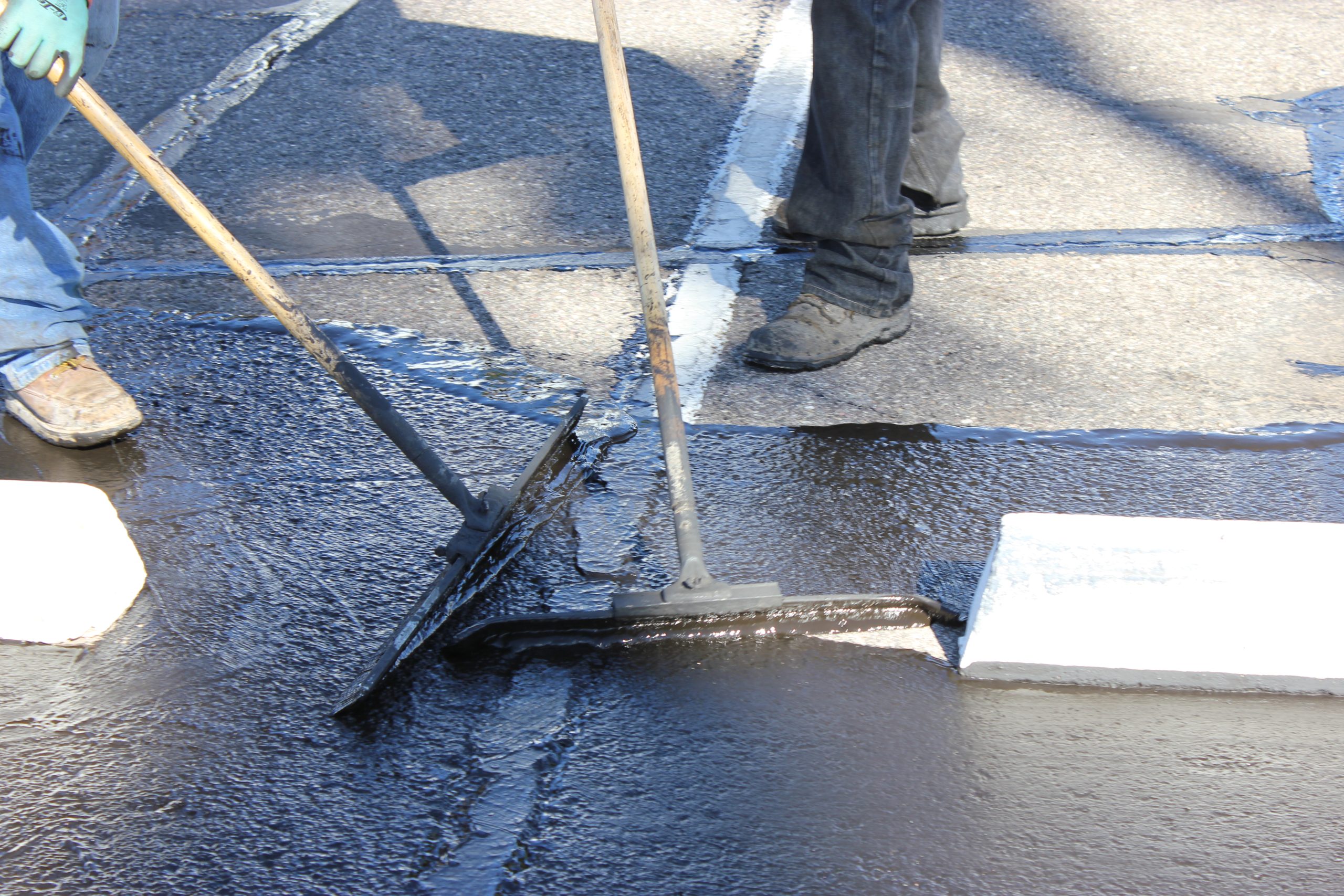 Seal coating is a liquid asphalt emulsion or coal tar sealant applied to the surface of existing pavement. It performs two important functions: it restores a dark, UV-resistant surface that slows oxidation, and it fills hairline surface cracks before they grow into structural cracks that admit water.
A well-timed seal coat, applied before pavement becomes too oxidized and brittle, can add several years to asphalt paving lifespan. For commercial properties in Southern Arizona, we typically recommend the first seal coat within two to three years of new pavement installation, and follow-up applications every three to five years depending on traffic and sun exposure. Seal coating is far less expensive than overlay or replacement and provides strong return on investment when applied on schedule.
When Is Asphalt Resurfacing Needed Instead of Seal Coating?
Seal coating addresses surface oxidation and minor cracking, but it cannot fix structural problems. When cracking has progressed to alligator cracking, a pattern of interconnected cracks resembling reptile scales, it indicates that water has already reached the base course and compromised its structural integrity. At that stage, the affected sections need to be removed, the base repaired, and new asphalt installed over the rehabilitated base.
Resurfacing, also called overlay, involves placing a new layer of asphalt over existing pavement that is still structurally sound but has a deteriorated surface. Overlay adds life to pavement that has surface wear but maintains an intact base structure. Our team assesses pavement condition before recommending the right intervention, whether that is surface treatment, overlay, or full-depth replacement, so you’re not spending more than the pavement needs.
What Can Property Owners Do to Maximize Asphalt Paving Lifespan in Tucson?
The most effective strategy for getting maximum life from pavement in Southern Arizona involves both proactive maintenance and good drainage management. Parking lots and access roads should be kept free of standing water, which means functioning inlets, unobstructed drain lines, and grading that moves water off the surface efficiently.
Regular seal coating on a consistent schedule protects against UV damage. Crack sealing should be performed seasonally, ideally in late fall before winter rains arrive, to prevent moisture from entering through cracks during monsoon season.
Property owners should also take tree root intrusion seriously. In arid regions where trees search aggressively for water, surface roots can push beneath asphalt and create heaving and cracking that spreads quickly. Addressing root intrusion early prevents it from becoming a large-scale pavement repair.
Plan for Your Asphalt Pavement’s Long-Term Performance
Asphalt paving lifespan in Southern Arizona doesn’t have to be shorter than in other regions; it just requires more attention to installation quality and consistent maintenance.
Eagle Rock Excavating installs new asphalt pavement and performs seal coating and resurfacing for commercial, industrial, and municipal clients throughout the Tucson area and Southern Arizona. If your pavement is showing signs of wear or you’re planning a new paving project, we’re ready to help.
Explore our asphalt services to learn more about what we do, or reach out to Eagle Rock Excavating to schedule an assessment or discuss your project.


