
Pavement Preservation in Pima County: Maintenance Timing for Sites

Pima County’s road pavement repair and preservation program points to a simple truth that also applies to private sites: timing matters.
The county uses pavement condition data and chooses treatments based on road condition, with the idea of using the right treatment at the right time, not waiting for full failure.
Pima County also set network goals through 2030 that rely on Pavement Condition Index PCI targets, which is another way of saying they track conditions and act early.
Eagle Rock Excavating wrote this guide to help you pick a maintenance path that makes sense for your site, your budget, and your risk level.
Why Preventive Maintenance Timing Matters in Parking Lot Maintenance
What Preventive Maintenance Means in Plain Words
Preventive maintenance means you act while the pavement still has structure left.
You are not rebuilding the lot. You are slowing wear so you can delay major work.
The Federal Highway Administration describes pavement preservation as work planned and performed to keep pavements in good condition, often summarized as “keeping good roads good.”
That same idea fits private sites when you catch problems early.
Why Timing Beats “Wait And See”
Waiting often looks cheaper in the moment, then turns expensive later.
Once water infiltration reaches the base, the surface can look repairable while the layer underneath keeps failing.
Pima County’s approach centers on matching the right treatment to the right condition, rather than applying the same fix everywhere.
Their selection process notes treatment choice depends on roadway condition and timing, and it also references Fiscal Year 2026 budget allocation for preservation work.
What This Signals for Your Site
If a large road network is managed with condition and timing rules, your parking lot maintenance plan should follow the same logic:
- Act early when the pavement still has strength
- Match the fix to the problem you see
- Treat drainage issues as a priority, not an add-on
Condition based Maintenance and Routine Inspection for Parking Lot Maintenance
What Condition based Maintenance Means
Condition based maintenance means you decide what to do after you look at the pavement and judge its condition.
You do not guess.
You look for signs, track changes, and choose work that fits what the pavement shows you.
Pima County uses a Pavement Condition Index PCI system to describe pavement condition on a numeric scale and guide decisions.
That is the public-road version of condition based maintenance.
What Routine Inspection Looks Like on a Private Site
A routine inspection does not require fancy tools.
You can do a solid first pass with a walk and a phone camera.
During a routine inspection, look for:
- Cracks that hold water after rain
- Low spots with ponding
- Areas where patching has repeated
- Raveling, where the surface looks rough and loose
- Tire scuffs and polished areas near entries and turns
- Joint openings near concrete edges and curb returns
Keep notes. If the same areas keep showing up, the pavement is telling you something.
How Often Routine Inspection Makes Sense
A common schedule is:
- One routine inspection in spring
- One routine inspection before monsoon season
- One routine inspection after major storms or flooding events
This simple rhythm catches drainage issues and water infiltration before they spread.
Drainage Issues and Water Infiltration That Drive Pothole Repair
Why Water Infiltration Is the Real Problem
Most pavement failures that “keep coming back” have water behind them.
Water infiltration goes through cracks, reaches the base, softens the support, and turns traffic loads into pumping and movement.
Even when the surface looks okay, water infiltration can keep weakening the layers under it.
Where Drainage Issues Show Up First
Drainage issues often show up in predictable spots:
- Bottom of a slope near entrances
- Around inlets that are clogged or too high
- Behind curbs where water has no exit
- Near downspouts that discharge onto pavement
- Around dumpster pads and loading zones where heavy loads sit
If water sits, the pavement suffers. It can be that simple.
Why Pothole Repair Repeats When Drainage Issues Stay
Pothole repair can fix the surface hole, yet the base can still remain wet and weak.
When the base remains weak, traffic breaks the repaired area again.
If you feel like you are patching the same potholes every season, ask one question first:
Where does water go when it rains?
If the answer is “it sits,” drainage issues are likely driving the cycle.
How Eagle Rock Excavating Fits In When Drainage Issues Are the Root Cause
Eagle Rock Excavating often sees lots that have been patched many times while the real issue remains: grading and drainage.
When drainage issues tie into base failure, excavation and storm drainage work can be part of the fix, not a separate project.
On the service side, that can include:
- Grading corrections so water moves away from low spots
- Storm drainage excavation for inlets, piping, and structures
- Subgrade repairs where water infiltration has weakened support
- Paving work once water control is corrected
This sequencing matters.
If you pave first and fix drainage later, you often pay twice.
Preventive Maintenance Steps That Slow Water Infiltration
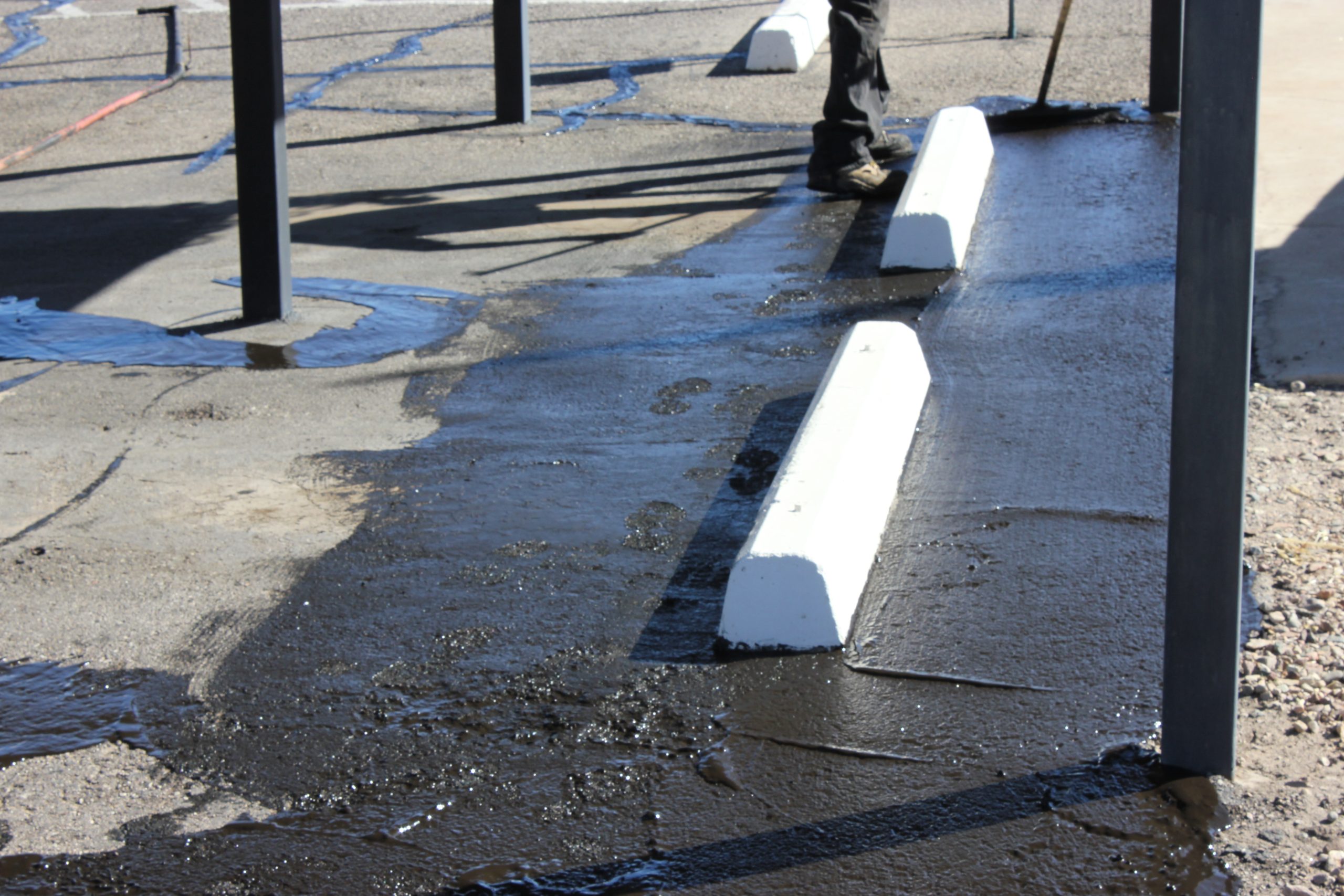 Step One: Routine Inspection and Small Crack Work
Small cracks are not “nothing.” They are entry points.
If you catch them early, you can slow water infiltration and delay deeper damage.
The FHWA pavement preservation memo describes the idea of applying cost-effective treatments while pavement remains in good condition, before serious damage begins.
Step Two: Surface Treatments When Pavement Still Has Strength
When the pavement still has structure, surface treatments can help slow oxidation and water entry.
Public agencies use surface treatments as part of preservation programs, and Pima County describes several treatment types and when they fit.
Keep your site plan simple:
- Treat early-stage cracking early
- Keep water moving off the surface
- Avoid waiting until cracks join into bigger patterns
Step Three: Fix Drainage Issues Before Big Spending
Drainage issues are the multiplier.
Fixing them can make every other dollar you spend work better.
If water infiltration stays, your pavement will keep losing the same fight.
Mill and Overlay Timing for Parking Lot Maintenance
What Mill and Overlay Means in Simple Words
Mill and overlay means removing a top layer of asphalt and placing a new layer.
This is larger work than patching.
It is often used when surface distress is widespread, but the base can still support the pavement after repairs and drainage correction.
Signs Mill and Overlay Might Make Sense
Mill and overlay becomes a serious option when you see:
- Widespread cracking across large areas
- Repeated pothole repair in multiple zones
- Roughness and ruts near turns and entries
- Many patches that create a bumpy surface
- Surface distress that keeps expanding each season
This is where “patch and wait” often turns into wasted spending.
When Mill and Overlay Might Not Solve the Problem
If the base is failing due to water infiltration, mill and overlay alone can still fail early.
If water remains trapped under the asphalt, you have not solved the root cause.
This is why drainage issues still come first in your decision-making.
How Eagle Rock Excavating Helps You Decide on Mill and Overlay
Our crew at Eagle Rock Excavating can help you sort the decision in a grounded way:
- Is the failure mostly surface wear, or base weakness?
- Are drainage issues driving water infiltration?
- Would targeted repairs and surface work buy time?
- Is mill and overlay the better value compared with ongoing pothole repair?
This keeps you from paying for the wrong scope.
Drainage Issues Fixes That Support Preventive Maintenance
Fix One: Restore Flow Paths
Water should move off the pavement and toward proper drainage points.
If grades have settled, that flow can stop.
Fix Two: Keep Inlets Working
Inlets clogged with sediment and debris can force water to the pond.
Ponding increases water infiltration.
Fix Three: Stop Downspout Damage
Downspouts dumping onto asphalt can carve channels and create slick algae zones, then cracking follows.
Fix Four: Treat Low Spots Like Priority Zones
Low spots collect water first, then fail first.
When you prioritize these zones, you slow the spread of distress.
Eagle Rock Excavating can handle grading and storm drainage work when these issues tie into bigger site performance problems.
From Routine Inspection to Pothole Repair
When Pothole Repair Is Fine
Pothole repair makes sense when:
- The pothole is isolated
- The surrounding pavement remains stable
- Drainage issues are not feeding the area
- You do not see repeated failure in the same spot
When Pothole Repair Turns Into a Cycle
Pothole repair turns into a cycle when:
- Water sits nearby
- Cracks feed into the patch edges
- The base stays wet
- Heavy loads hit the same lane daily
In these cases, the patch is doing its job, yet the base keeps failing.
This is when you shift thinking toward drainage fixes, deeper repairs, or mill and overlay.
What People Also Ask About Preventive Maintenance and Mill and Overlay

What Is Preventive Maintenance for Parking Lot Maintenance
Preventive maintenance means early work that slows wear and delays major repairs.
It often starts with routine inspection and early crack work, then expands to treatments when pavement remains in good condition.
FHWA describes preservation as acting before serious damage begins.
What Does Condition based Maintenance Mean for Private Sites
Condition based maintenance means you decide what to fix after you look at the pavement and judge what condition it is in, rather than relying on a fixed calendar alone.
Pima County uses condition ratings such as PCI to guide treatment selection in their road program.
When Is Mill and Overlay Better Than Repeat Pothole Repair
Mill and overlay often becomes the better choice when distress is widespread, patching repeats across many areas, and the surface has lost smoothness and structure.
Drainage issues and water infiltration still matter, since base problems can shorten the life of a new overlay.
Why Do Drainage Issues Cause Faster Pavement Failure
Drainage issues can lead to ponding and water infiltration.
Water weakens the base and causes movement under traffic loads, which speeds cracking and pothole repair cycles.
What to Do Next for Parking Lot Maintenance Using Routine Inspection
If you want a clear next step that does not feel overwhelming, do this:
- Schedule a routine inspection walk this month
- Take photos of ponding areas after rain
- List your top three repeat pothole repair spots
- Note any drainage issues like clogged inlets or downspouts dumping on pavement
- Decide whether the next action is crack work, drainage correction, or a larger plan such as mill and overlay
Prevent Problems With Maintenance & Pothole Repair
When you wait too long, pothole repair becomes a repeat task, and costs climb.
If you want a clear, practical plan for parking lot maintenance, Eagle Rock Excavating can review the surface condition, look for drainage issues, and help you sort whether simple repairs, preventive maintenance work, or mill and overlay makes sense.
When you are ready to talk through options and get a quote, call Eagle Rock Excavating and ask for a free estimate.


