
 Construction in Phoenix keeps moving forward, from large-scale developments in the West Valley to new commercial spaces across Maricopa County.
Before a single wall goes up, the ground itself must be prepared correctly, and that’s where excavation becomes the foundation of every project.
According to the U.S. Department of Transportation, improper excavation is one of the leading causes of utility damages nationwide.
Commercial excavation services involve much more than moving dirt.
They require planning, compliance with city and county regulations, safe utility coordination, and precision grading that will affect every stage of construction. Eagle Rock Excavating is here to help you make better decisions and keep your project on track.
What Commercial Excavation Includes in Phoenix
Commercial excavation services in Phoenix cover far more than digging foundations.
A full project often involves site clearing, grading, trenching, compaction, and preparing utilities before above-ground work begins.
What Complete Excavation Covers
- Site clearing – Removing vegetation, debris, or existing structures.
- Grading – Shaping the land for proper drainage and building foundations.
- Utility trenching – Preparing space for water, sewer, electrical, and communications.
- Compaction testing – Making sure soil strength meets city and engineering standards.
- Storm drainage integration – Installing inlets, culverts, and underground piping.
- Paving and curbs – Completing the site with asphalt, concrete, and access points.
Eagle Rock in Action
Our team provides complete excavation solutions that include grading, underground utility installation services, storm drainage, paving, and site restoration.
Because these services are handled in-house, projects stay on schedule and avoid delays caused by coordinating multiple subcontractors.
Pre-Construction Steps for Commercial Excavation Services
 Site Investigation and Soil Testing
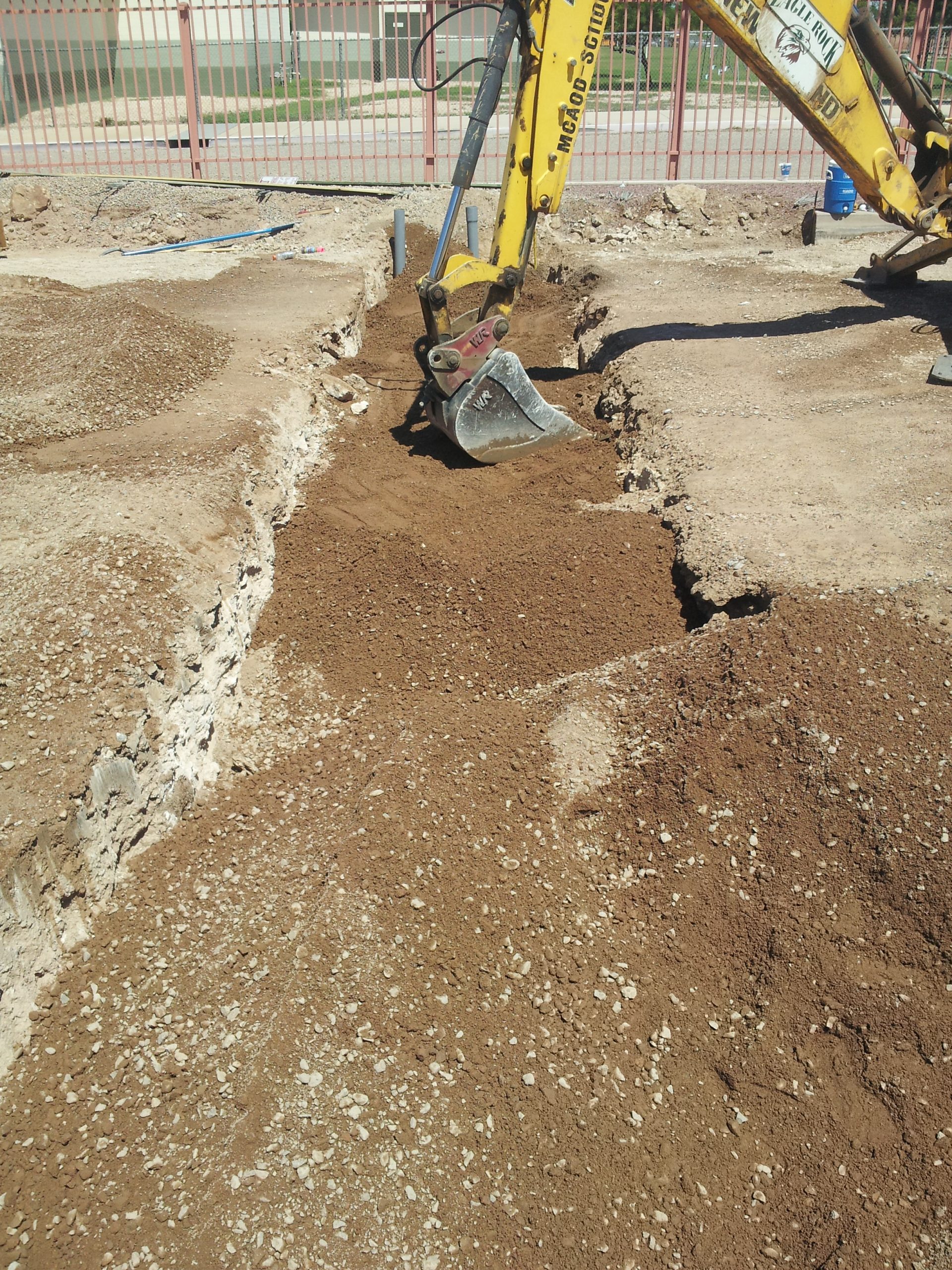
Every project begins with understanding the site conditions.
In Phoenix, soils vary from sandy loam to hard caliche, which can change excavation costs and equipment needs.
Geotechnical testing identifies soil type, bearing strength, and potential groundwater concerns before excavation begins.
Permitting and Local Requirements
Maricopa County and the City of Phoenix both require excavation permits, erosion control plans, and dust mitigation strategies.
According to the Maricopa County Air Quality Department, contractors must follow Rule 310, which sets strict requirements for dust control on construction sites.
Failure to comply can lead to penalties.
Dust and Erosion Controls
Phoenix’s dry climate makes dust one of the top environmental concerns.
Projects require water trucks, soil stabilizers, or gravel pads at site entrances to keep dust from leaving the property.
Proper erosion control is also essential during monsoon season when heavy rain can wash out unprotected sites.
Eagle Rock in Action
We prepare permit packages and perform site inspections early to prevent delays.
Our crews also set up dust control measures that comply with Maricopa County standards, keeping projects safe and in line with local regulations.
Excavation & Trenching Best Practices
Safe Trenching Procedures
Commercial excavation services almost always involve trenching for utilities.
According to OSHA, trench collapses are among the most serious hazards in construction.
Shoring, sloping, or trench boxes are required depending on soil type and depth.
Compaction During Trenching
Backfilling a trench is not just about covering a pipe.
Proper compaction is required so the soil doesn’t settle later, which could cause utility damage or pavement failure.
Phoenix specifications often call for density tests to confirm compaction results.
Heavy Equipment and Scheduling
Excavation in Phoenix requires coordination with traffic management and sometimes night work to avoid peak-hour congestion.
Proper sequencing, like excavation before utility installation, followed by compaction, greatly reduces the chance of rework.
Subgrade & Compaction: Why It Determines Pavement Life
The Role of Subgrade
The subgrade is the soil layer beneath concrete or asphalt.
If it’s weak or improperly compacted, even the best pavement will crack or fail early.
Phoenix Soil Challenges
Caliche (a calcium-carbonate cemented layer) is common in southern Arizona; it can be very hard to excavate and its thickness/quality varies.
Proper management (removal, treatment, or controlled use) can provide a firm bearing, but caliche can also be variable and sometimes problematic; geotechnical guidance is required.
Sandy soils, on the other hand, require moisture and density adjustments before construction.
Testing and Verification
Nuclear density tests and proof rolls are often required by city inspectors before paving can begin.
This step confirms that the subgrade is strong enough for heavy traffic loads.
Eagle Rock in Action
Eagle Rock Excavating prepares and compacts subgrades for parking lots, streets, and commercial pads.
We coordinate directly with testing agencies so that compaction passes inspection the first time, keeping schedules on track.
Utilities & Underground Installation Services
What Owners Must Provide
Before excavation starts, property owners or contractors must provide verified utility locates.
In Arizona, calling 811 at least two working days before excavation is a legal requirement. Public utilities will then mark their lines on-site.
Role of Excavation Contractors
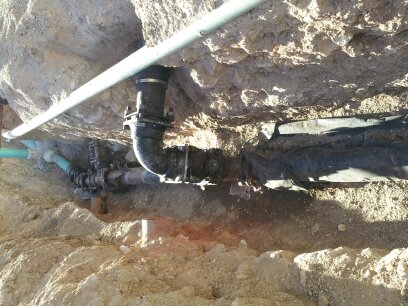
After utilities are marked, excavation contractors dig trenches, place conduits or pipes, and backfill with compaction.
Utility installation services often cover water, sewer, storm drains, electrical, and communications lines.
Eagle Rock in Action
Our team installs underground utilities after verified locates are provided.
Our crews handle trenching, bedding, pipe placement, and backfilling so utilities are protected and ready for inspection.
Integrating Storm Drainage & Paving With Site Excavation
 Stormwater Management in Phoenix
Phoenix receives intense rainfall during monsoon season.
Without proper drainage, commercial sites can flood, erode, or damage pavement.
Drainage inlets, culverts, and retention basins are common requirements in new developments.
Paving as Part of Excavation Landscaping
Commercial excavation services also include final site finishes.
Excavation landscaping may involve grading around parking lots, curbs, sidewalks, and storm drains to direct water flow safely.
Eagle Rock in Action
Because Eagle Rock provides both excavation and paving, our crews integrate storm drainage and final paving into a single sequence.
This reduces gaps in scheduling and creates a smooth transition from underground utilities to finished surfaces.
Project Closeout: Testing, Inspections, and Documentation
 Testing and Inspection Requirements
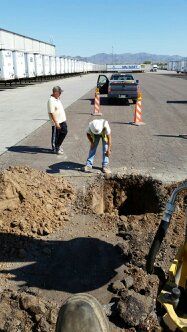
Commercial projects in Phoenix require compaction reports, concrete strength tests, and utility pressure checks before approval.
Inspectors verify that construction meets engineering specifications and city codes.
As-Built Documentation
Final drawings must show the exact location of underground utilities, drainage structures, and pavement layouts.
These records are essential for future maintenance and compliance.
What to Ask Your Excavation Contractor
Before starting a project, here are key questions to ask any contractor providing complete excavation or commercial excavation services in Phoenix:
- How do you handle compaction testing and verification
- What is your experience with Maricopa County dust control rules?
- How do you schedule excavation during the monsoon season?
- Do you provide utility installation services or subcontract them out?
- How do you coordinate excavation with paving and storm drainage?
Conclusion: Work With Eagle Rock Excavating
Commercial excavation services in Phoenix require planning, compliance, and precision.
Eagle Rock Excavating offers complete excavation services that cover grading, utility installation services, storm drainage, and paving with in-house crews.
This single-source approach reduces delays, prevents gaps between trades, and keeps your project moving smoothly.
If you’re preparing for a commercial build or site work project, Eagle Rock Excavating can help.
Call us today or request an estimate to discuss how our commercial excavation services in Phoenix can keep your project on track from start to finish.


