
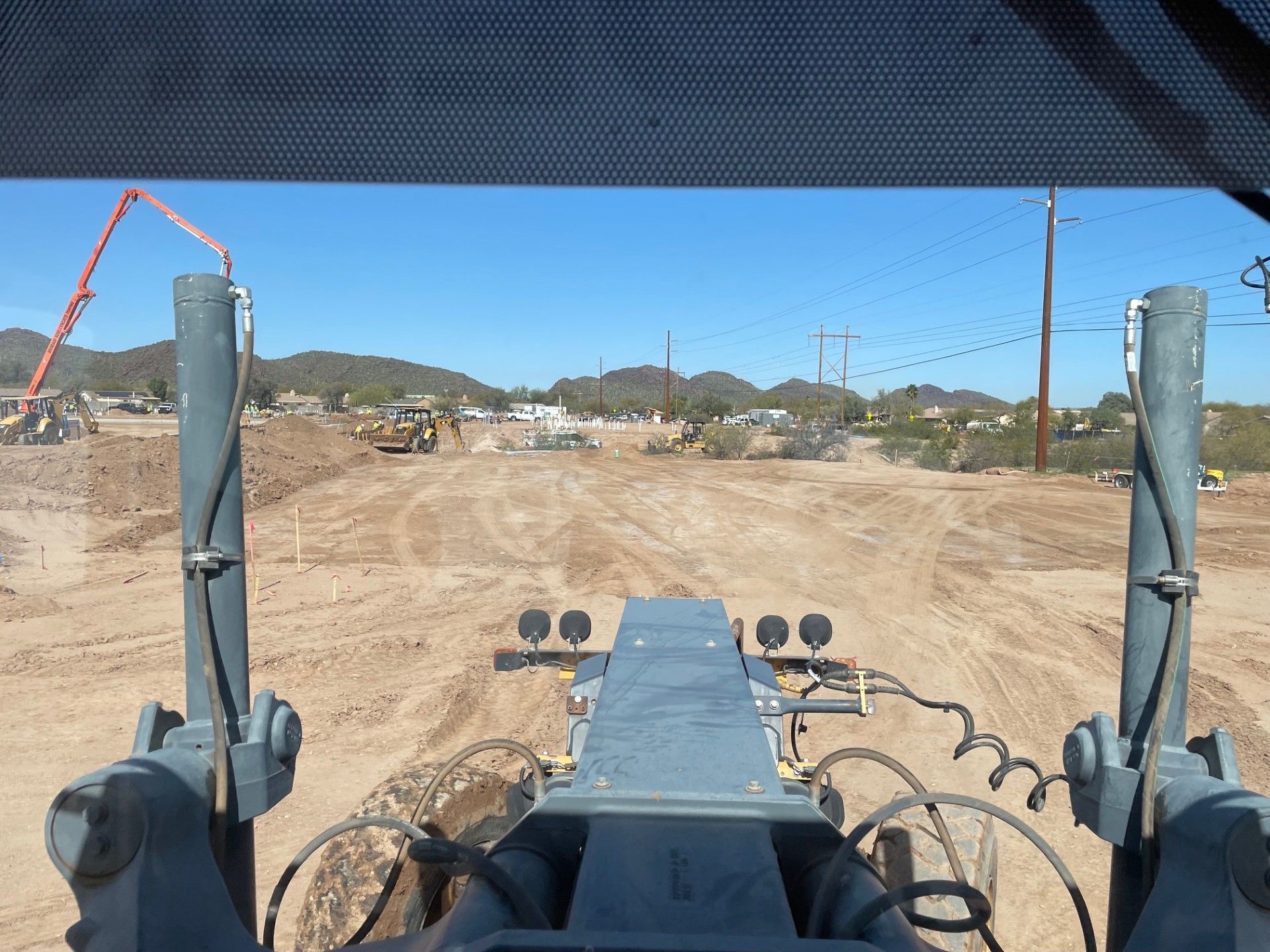
The stability of the ground beneath your property is a critical factor in the success of any building project in Arizona.
Expansive soils, seasonal moisture fluctuations, and shifting ground can lead to foundation cracks, leaks, and uneven settlement if not properly addressed.
Conducting soil compaction testing provides a reliable assessment of soil stability, helping to reduce the risk of costly foundation repair costs in the future.
Eagle Rock Excavating supports homeowners and commercial developers with comprehensive site preparation and compaction services to establish a strong and dependable foundation for your project.
Why Soil Compaction Testing Matters for Foundation Crack Repair
Arizona’s soil landscape presents special challenges.
According to the Arizona Geological Survey (AZGS), expansive‑clay and collapsing soils are widespread in the state and are associated with damage to foundations and other structures.
When soils beneath a structure are loosely compacted, they may shift, allowing stress to build in foundation walls and slabs.
That stress can lead to cracks or movement, which is an issue typically addressed with foundation crack repair.
Soil compaction testing checks if the soil beneath your building meets density and moisture criteria needed to support structural loads.
While testing doesn’t guarantee there will be no foundation issues, it helps reduce the risk of settlement or cracking by verifying the sub‑grade is properly prepared.
How Soil Movement Can Lead to Foundation Leak Repair
Loose or inadequately compacted soil may allow water to collect beneath or around foundations.
In Arizona’s climate, along with seasonal monsoon rains, this water may saturate soils and cause expansion.
As the soil then dries, it shrinks, potentially leaving voids or causing the foundation to move.
That movement can create cracks or openings where water enters, resulting in foundation leak repair needs.
AZGS confirms that moisture‑driven soil volume changes are an important factor in foundation damage in the region.
In incorporating compaction testing into your site prep process, you reduce one element of risk for such leaks.
Eagle Rock Excavating works with geotechnical professionals to coordinate testing, grading, and compaction so your site is better positioned for long‑term stability.
Understanding Soil Types and Foundation Repair Cost
Every site in Arizona is different. The state has many soil types, including heavy clay, silty clays, and sand layers.
Expansive clay soils, for example, are more likely to shift with changing moisture content.
When soil type is poorly matched to building loads or left insufficiently compacted, the cost of fixing foundation issues such as settlement or cracking can climb quickly.
While national estimates show residential foundation repair costs can range from a few thousand to more than ten thousand dollars depending on severity, scope and region, the best strategy is prevention.
Ensuring proper soil compaction upfront helps keep potential foundation repair cost down.
Structural Repair Near Me: Why Location‑Specific Soil Matters
If you’ve searched for “structural repair near me”, you may have discovered how localized soil problems can be.
Even in the same neighborhood, soil composition, moisture retention, and historical grading can vary, and those differences influence foundation performance.
Soil compaction testing is site‑specific: it tells you how your actual soil behaves under construction loads rather than relying on assumptions.
For commercial developments and residential builds alike, this precision matters.
Our team at Eagle Rock brings knowledge working across Arizona terrain, from Tucson to Phoenix suburbs.
So if you’re a homeowner or a developer, the same process of testing and compaction applies.
How Compaction Testing Prevents Foundation Settlement Repair
One of the largest costs in foundation repair is fixing settlement—when parts of the structure sink or shift unevenly.
Settled foundations typically require underpinning, structural lifts, or piecemetal re‑support.
Soil compaction testing reduces that risk because it verifies soil density and behaviour before construction begins.
According to geotechnical literature, when soils are compacted to target densities, voids and weak zones are reduced and the bearing capacity of the site is improved.
While compaction testing is only one part of a broader foundation strategy (which also includes drainage, foundation design, and building loads), skipping it increases the risk of future foundation settlement repair.
Testing Methods and What They Reveal
Here’s a breakdown of common methods and what they tell you:
- Field Density Tests – often performed onsite using a nuclear gauge or sand cone method to confirm soil weight per volume.
- Moisture Content Verification – soil must have the right amount of water to compact properly, because too wet or too dry can both lead to problems.
- Lift Thickness & Compactive Effort – soil is placed in lifts (layers) of specified thickness and compacted. Testing each layer ensures there are no weak zones.
- Laboratory Proctor Tests – in a lab setting, soils are tested to see how they achieve maximum dry density under controlled compactive effort. Results guide the field compaction targets.
These methods provide data that informs the excavation, grading and foundation design process.
Eagle Rock Excavating uses this information, combined with geotechnical input, to align their site preparation work with compaction requirements.
Preparing Your Site with Eagle Rock Excavating
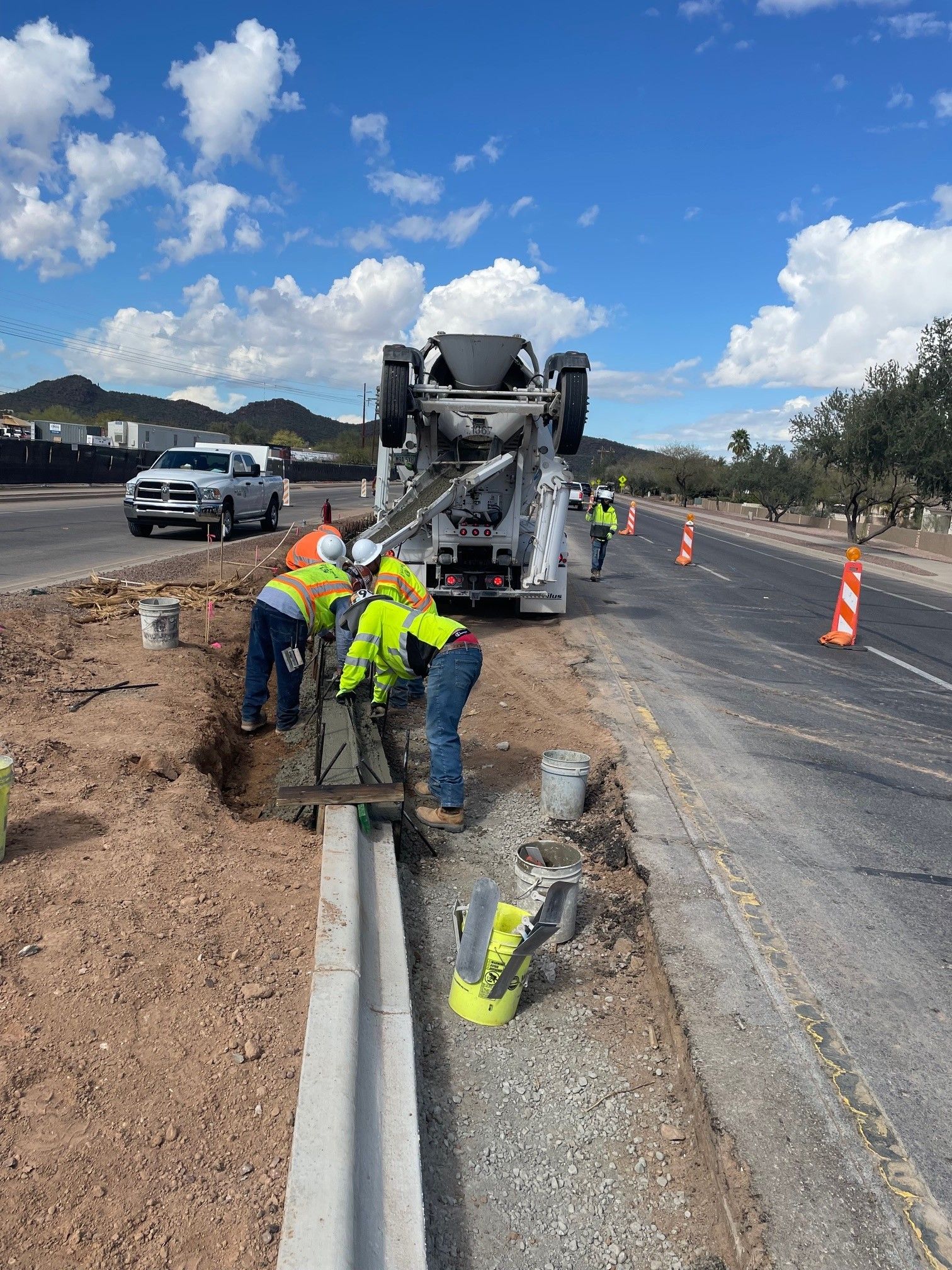
Correct site preparation is more than just flattening ground.
It involves careful coordination between excavation, grading, testing and documentation.
Here at Eagle Rock Excavating:
- We start by reviewing the geotechnical report and compaction targets.
- Then we handle sub‑grade preparation, lift placement and compaction as required.
- We coordinate field density and moisture tests, and review results alongside engineers.
- For both residential and commercial builds, we provide the in‑house resources to complete excavation and grading tasks effectively.
In incorporating compaction testing into our site‑work process, we help property owners reduce the chance of future foundation repair service needs, may it be from cracking, settling or leaks.
Tips for Property Owners in Arizona
Here are a few practical steps you can take:
- Include soil compaction testing as part of your site‑work scope before foundation construction begins.
- Ask your design or site team about lift thickness, moisture control and testing frequencies.
- Ensure that downspouts and drainage direct water away from foundations to support stable soils.
- Choose excavation and site‑work contractors (like Eagle Rock Excavating) experienced with Arizona soils and compaction standards.
- Monitor settlement or signs of movement after construction; early detection helps prevent larger repairs.
Soil Types in Arizona and Their Compaction Risks
Understanding your soil type helps you appreciate why compaction matters.
Here are a few common types:
- Expansive Clay Soils – These are clay‑rich soils that change volume when moisture varies. AZGS identifies these as a major hazard in Arizona.
- Sandy or Silty Soils – May not swell as much, but if lightly compacted, they can shift or settle under load.
- Collapsing Soils – Loose, dry soils that lose volume or compact further when wet or loaded. Good compaction testing and fill design help mitigate this risk.
In each case, testing and proper compaction reduce the uncertainty about how those soils will behave once the structure is built.
The Cost Benefits of Soil Compaction Testing
While there is an upfront investment in testing and site preparation, the cost is small compared to potential foundation repair.
The literature shows that structural damage from expansive soils is common in Arizona and affects foundations, walls and pavements.
In identifying and addressing risky soils early, you reduce the chance of needing major foundation settlement repair, foundation leak repair, or other large‑scale foundation repair service interventions.
For commercial projects, the stakes are higher, and Eagle Rock Excavating offers the equipment and site‑work expertise to support large‑scale compaction and grading.
Commercial Foundation Repair Considerations
Commercial developments place heavier loads on foundations, and the footprint may span a large area with varying soil conditions.
Proper soil compaction testing is critical to verify that all zones meet design criteria so you avoid uneven settlement or structural distress.
Our crew is equipped to handle commercial site work, from grading to underground utilities to paving.
We coordinate with engineers to integrate compaction test data into the build process.
This approach helps reduce the possibility of costly commercial foundation repair work later.
Summary of Soil Compaction Testing Benefits
- Provides insights into whether the soil beneath your structure is properly prepared.
- Helps reduce risk of foundation settlement repair, foundation crack repair and foundation leak repair.
- Supports both residential and commercial builds through professional site‑work coordination.
- Makes foundation repair cost more predictable by reducing unknowns in the soil.
While no single measure guarantees zero foundation issues, soil compaction testing is a key control in your site‑work strategy and deserves a spot on your project checklist.
Protect Your Arizona Foundation With Professional Site Prep
If you’re planning to build in Arizona, don’t leave your foundation’s performance to chance.
Soil compaction testing is a crucial step that gives you greater confidence in your site’s readiness for construction, and helps reduce the risk of foundation settlement repair, foundation leak repair and other foundation issues.
Here at Eagle Rock Excavating, we provide site preparation services tailored for Arizona’s soils.
We do sub‑grade preparation, compaction support, grading and excavation for both residential and commercial projects.
Reach out to us today to schedule a consultation and get a quote for your next project.
With the right preparation, you give your building a firm start.


