
If you care about the look and life of your pavement, picking the right sealer is very important.
In Southern Arizona heat, UV and sun exposure speed up asphalt aging and make choosing the right product important for performance and cost.
Eagle Rock Excavating compares the three common sealcoat choices such as PMM (Polymer-Modified MasterSeal), conventional MasterSeal emulsion options, and hot-applied rubberized sealants like DEERY 220.
Our team will show when each option fits driveways, parking lots, and heavy-traffic surfaces.
We also cover what affects driveway sealing cost and what you should ask a contractor when you search for sealcoating near your area.
What Sealcoating Does for Asphalt Driveways
Sealcoat covers the top layer of asphalt to slow oxidation, guard against water intrusion, and give the surface a darker, uniform look.
It does not fix structural failure.
If the asphalt is already failing or has widespread base problems, you will need repairs or repaving before the sealcoat is useful.
Preservation work like sealcoating is a common first step in pavement maintenance because it can delay bigger repairs and extend service life when done at the right time.
What Is PMM and When to Use It?
PMM Basics and Application Notes
PMM (Polymer-Modified MasterSeal) is a thick, high-solids asphalt emulsion mixed with sand on the job site. It’s usually applied in two coats, or three for heavy-traffic areas.
This product dries faster than regular water-based sealers and works well for parking lots and driveways.
Manufacturers recommend checking pavement temperature before applying and following listed coverage and mix ratios.
When applied correctly, PMM covers about 85–95 square feet per gallon per coat.
Where PMM Works Best
- Commercial parking lots with medium to heavy traffic.
- Driveways where a darker, uniform finish and quick turnaround matter.
- Sites where you want a product that tolerates sand-filled applications to give traction.
How Eagle Rock Excavating Uses PMM on Projects
We evaluate pavement condition first and will often recommend PMM for busy lots where faster curing and a tougher film are useful.
Our crews can handle surface repairs, crack filling, and mechanized squeegee application to meet manufacturer application notes.
When you ask for an asphalt driveway sealer estimate, tell the crew about traffic, oil exposure, and how soon you’ll need the lot back in service so they can recommend the right PMM mix.
What Is Conventional MasterSeal and When to Use It?

Conventional Emulsion Sealers Explained
MasterSeal MTR is a clay-stabilized, mineral-filled asphalt emulsion that’s modified with ground tire rubber for stronger performance.
It’s made to protect and restore asphalt surfaces like driveways, parking lots, walkways, and roadways.
The product dries to a deep black color and adds a durable layer that resists wear from weather and traffic.
Before applying, the pavement should cure for at least 60 days, be clean, and have cracks or oil spots repaired.
In hot weather, lightly misting the surface with water helps make the application smoother.
Best Uses for Conventional MasterSeal
- Low-traffic residential driveways.
- Freshly cured asphalt (after proper cure time) where a simple protective coat is the main goal.
- Owners who want a lower upfront cost and acceptable aesthetics for light use.
Eagle Rock Excavating and Conventional Sealers
For driveways and light-use lots in Tucson and Southern Arizona, Eagle Rock Excavating often recommends conventional MasterSeal products when the surface is in good condition.
We handle all prep work, including cleaning, crack filling, and surface inspection, so the sealer bonds correctly and delivers the best finish.
How Is Hot-Applied Sealant Different from Emulsion Coatings?
Hot-Applied Rubberized Sealants Like DEERY 220
Hot-applied rubberized materials are different materials and different uses.
They are heated before application and are typically used for sealing joints, traffic loops, and wide cracks.
DEERY 220 is one such product: a hot-applied, elastically modified sealant intended for joints and random cracks in asphalt or concrete pavements.
It is not a surface sealer for cosmetically resurfacing an entire driveway.
Technical datasheets from Deery American emphasize correct heating, agitation, and handling for safety and performance.
Why Hot-Applied Materials Are Chosen
- They stay more flexible in heat and cold and resist pulling out of joints.
- They form a barrier against water and debris filling joints and cracks.
- Field studies and agency reports show hot-pour materials often have longer initial effectiveness for crack sealing than some cold-pour products. A multi-year TxDOT/CTR study found hot-pour products performed slightly better over several evaluations.
Where Eagle Rock Uses Hot-Applied Sealants
Eagle Rock Excavating uses hot-applied sealants when the conditions call for them.
In joints that move, for airport or heavy-duty access points, or when a long-lasting flexible joint seal is needed.
For these jobs, our team handles routing, cleaning, and safe hot-fill application, and follows the product’s heating and temperature guidance.
Where You Should Use Each Sealcoat

Busy Commercial Lots
PMM is a strong fit because of its deeper film and quicker turnaround.
Mention parking lot sealer options when you ask a contractor.
Home Driveways With Light Use
Conventional MasterSeal or similar emulsion sealer can protect and darken the surface at a lower cost.
Wide Joints, Loops, or Airport Areas
Use hot-applied rubberized sealants like DEERY 220 to fill joints and resist movement.
This is often paired with surface sealing work.
Why Surface Prep Matters More Than The Brand Name
No sealer performs well on a surface with loose material, oil stains, or open cracks.
Surface prep steps that affect results include cleaning, oil/grease spot treatment, crack routing and sealing, and compacted patching for low spots.
Our company inspects surfaces first, repairs or preps as needed, and confirms pad and edge conditions before applying any sealer.
If you skip prep, you risk poor bond or premature peeling.
Eagle Rock Excavating Answers Your Questions
How Often Should You Sealcoat a Driveway?
Most pavement pros recommend reapplying every two to three years depending on traffic and exposure.
PMM can hold up well in high-use zones but plan on regular checks in intense sun.
Can I Seal Over Oil Stains?
No. Treat and remove oil and fuel stains before sealing or the sealer will not bond and may fail prematurely.
Can I Do This as a DIY Job?
You can do minor jobs, but large driveways and commercial lots need surface prep, equipment, and safety measures.
Also, hot-applied materials should only be handled by trained crews because of heating and safety risks.
Will Sealcoating Fix Structural Problems?
No. Sealcoating is a preservation step.
If the asphalt is failing due to base or subgrade issues, you will need patches or repaving before sealing.
How We Handle Sealcoat Jobs for Your Projects
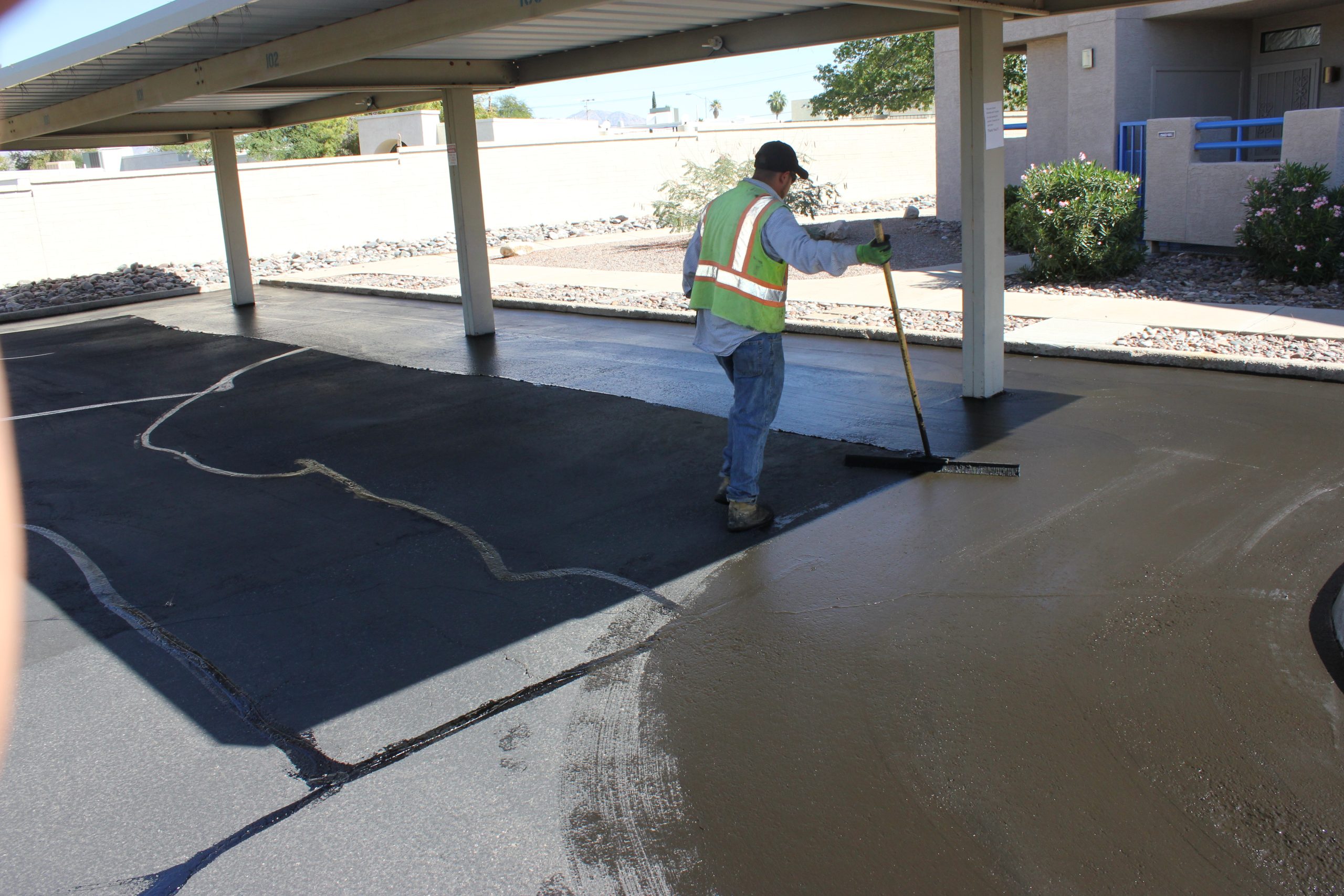
Eagle Rock Excavating inspects your pavement and gives a written scope that separates prep from coating work.
For commercial parking lots, we often recommend PMM and mechanized applications to get a robust film and faster cure.
For joints and wide cracks, we use hot-applied sealants such as DEERY 220 when the site calls for it, and follow the manufacturer heating and safety notes.
We verify surface prep, ambient temperatures, and product mix before each sealcoat application so you have a solid record of what was done.
Signs It’s Time to Reseal Your Driveway or Lot
If you see these signs, ask for an inspection and a line-item quote that lists prep, crack sealing, and the sealer type recommended.
- The surface is faded and gray rather than black.
- Fine cracks begin to appear and the surface looks dry.
- You see increased water pooling or loss of surface texture.
- You have heavy oil or chemical staining that threatens the binder.
Choose The Right Driveway Seal Coating for Your Projects
When you choose between PMM, conventional MasterSeal products, and hot-applied rubberized sealants, think about traffic, climate, and surface condition.
PMM is a strong choice for busy lots and driveways that need a durable asphalt driveway sealer.
Conventional emulsion sealers like MasterSeal MTR can be a good value for light-use driveways.
Hot-applied materials like DEERY 220 are best for joint work and wide cracks where flexibility and long-term sealing matter.
If you want help deciding which fits your pavement and budget, Eagle Rock Excavating inspects surfaces, lists prep needs, and helps you compare options to understand driveway sealing costs.
Call us at 520-514-2779 to request an inspection or an estimate.


