

Trenching, grading, and excavation are important steps in many construction and landscaping projects, and figuring out the right approach can save you a lot of time, money, and headaches.
Each of these tasks has its own purpose, so understanding how they fit into your project will help you plan better and avoid issues later on.
Depending on what you’re working on—whether it’s installing pipes or getting the ground ready for a new build—it’s important to know exactly what services you need and what tools are involved.
What Is Trenching and When Do You Need It?
Trenching involves digging narrow, deep channels in the ground, and it’s a key part of many projects where utilities need to be installed, like water pipes, gas lines, or electrical conduits.
If your project requires underground systems, trenching is often a big part of the prep work.
One of the most important things to consider when trenching is the type of soil you’re working with, as this affects the trench’s stability.
Soils like clay, sand, or loam each behave differently, and understanding your site’s soil conditions is essential to avoid problems down the line.
The Importance of Trenching
For residential projects, trenching is often used for things like sprinkler systems or drainage solutions.
In larger projects, trenching ensures that important utilities are safely buried, reducing the risk of future damage.
It’s crucial to hire a contractor who is familiar with local building codes, as improperly dug trenches can lead to safety issues and potential fines.
Techniques like shoring or sloping are also necessary to prevent cave-ins and ensure the trench remains secure throughout the process.
What Is Grading and Why Is It Essential for Your Project?
Grading is all about leveling or reshaping the land to create a solid foundation for construction or landscaping, ensuring proper drainage and preventing issues like flooding or erosion.
Whether you’re building a driveway, patio, or home foundation, grading is a crucial first step that directly impacts the stability and durability of the finished structure.
It can involve removing excess soil or filling in low spots to achieve a level surface.
For sloped sites, grading helps direct rainwater away from your property, which is vital for preventing water damage.
The angle and direction of the slope are key, and skilled professionals use specialized equipment to make sure everything is done right.
Shaping The Landscape
In landscaping projects, grading not only affects the overall look of your design but also plays a functional role by ensuring that water flows where it’s supposed to.
If grading isn’t done correctly, you could face issues later, such as foundation problems or uneven surfaces that are costly to fix.
Choosing a contractor who knows how to balance these practical and visual elements is essential for achieving a smooth and long-lasting result.
When Is Excavation Necessary?
Excavation is a critical process when you need to dig out large amounts of earth for things like basements, swimming pools, or roadways.
Unlike trenching, which targets narrow areas, excavation covers a wider space and typically requires heavy machinery such as bulldozers or excavators.
It’s often one of the first steps in major construction projects, laying the groundwork for everything that follows.
If your project requires removing large amounts of soil or rocks, excavation is the method you’ll rely on.
This can range from digging a foundation for a new building to leveling a site for construction or even creating a pond.
Digging Deeper
Safety is a top priority during excavation because of the depth of the digging and the weight of the materials being moved.
Contractors need to make sure the site is secure for workers and future occupants, as the stability of the area depends on proper excavation techniques.
Another crucial part of the process is backfilling, where a portion of the soil is returned after the main digging is complete.
This helps ensure the ground stays stable and doesn’t sink or shift over time.
Picking an excavation team with the right experience is essential to making sure your project starts off on solid ground, both literally and figuratively.
What Are The Safety Considerations for Trenching, Grading, and Excavation?
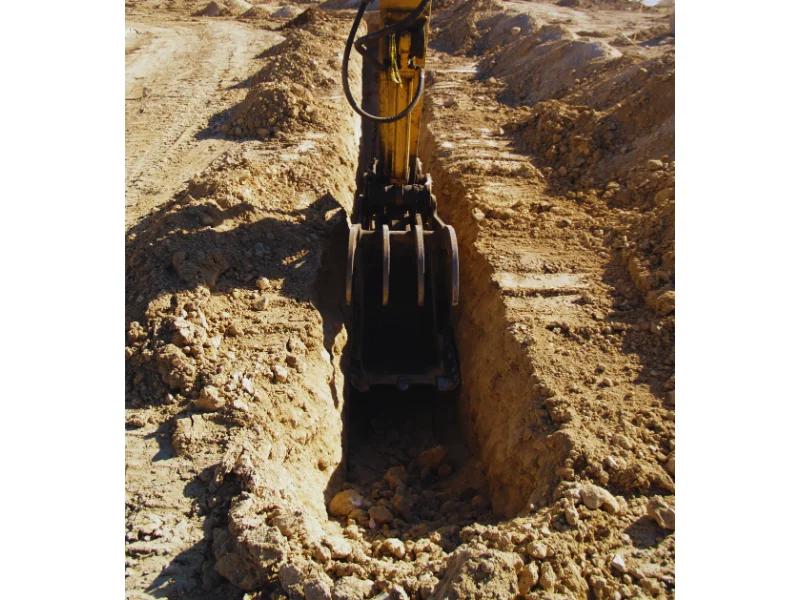
Safety is a top priority for any construction project that involves trenching, grading, or excavation.
Without the right precautions, these jobs can quickly become dangerous.
Trenching and Excavation
In trenching and excavation, one of the biggest risks is a cave-in. If the walls of the trench aren’t properly supported, they can collapse, putting workers at serious risk.
To prevent accidents, OSHA (Occupational Safety and Health Administration) has clear guidelines for trenching & excavating.
- Support Systems – Use trench boxes, shoring, or shielding for trenches deeper than five feet to prevent collapse.
- Inspections – Conduct daily inspections and after any change in conditions to identify potential hazards.
- Access and Egress – Provide safe entry and exit points, like ladders or ramps, within 25 feet of workers in trenches deeper than four feet.
- Hazard Identification – Evaluate for potential hazards such as nearby traffic, utilities, or unstable soil.
- Water Control – Implement measures to manage groundwater and prevent flooding in trenches.
Grading
When it comes to grading, the main concern is water management.
If grading is done poorly, water might pool around your home’s foundation or other structures.
Over time, this can cause significant damage, or even structural issues, if left unaddressed.
A good contractor will take the time to carefully assess the site before starting and follow all safety best practices to ensure the project goes smoothly without unnecessary risks.
How Can You Choose the Right Contractor for Your Project?
Finding the right contractor for trenching, grading, or excavation can make all the difference between a hassle-free experience and an expensive headache.
Another key factor is ensuring the contractor is familiar with local building codes and safety regulations, especially when it comes to excavation and trenching.
You can contact a heavy civil contractor near you who understands the specifics of soil types, water drainage, and the structural integrity of your property to handle the job and prevent issues down the road.
How Do Trenching, Grading, and Excavation Affect Your Project Timeline?
The timeline for trenching, grading, and excavation can vary widely based on the scope of your project, soil type, and even the weather.
It’s important to remember that soil conditions play a huge role—some soils are easier to dig than others, and this can impact how long the job takes.
To keep everything on schedule, it’s essential to work with contractors who are experienced and can give you a realistic estimate upfront.
Choose Eagle Rock Excavation for Your Project Today
Getting the details right for trenching, grading, and excavation can make all the difference in how your project turns out.
It requires expertise, attention to detail, and a strong focus on safety and efficiency.
When it comes to these techniques, choosing the right team can make all the difference in protecting your property and preventing costly mistakes down the line.
At Eagle Rock Excavation, we specialize in delivering top-quality results tailored to your project’s specific needs.
Whether you need help with drainage, leveling your land, or digging for utilities, our team has the experience and equipment to handle it all.
If you want to take the stress out of your next excavation, grading, or trenching project, give Eagle Rock Excavation a call.
We offer free estimates and personalized service, so you’ll know exactly what to expect from start to finish.
With us on your side, you can feel confident that your project will be handled with care, precision, and professionalism every step of the way.


