
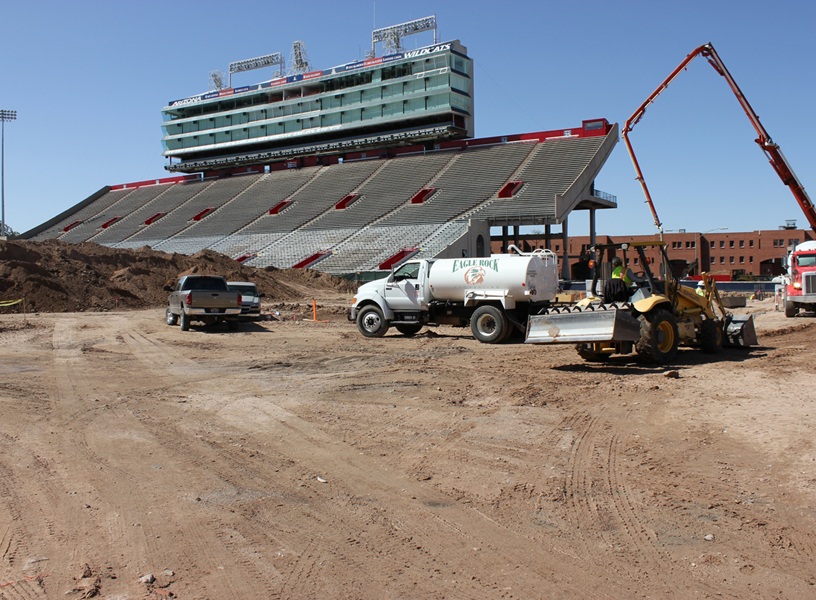
 Civil construction is the branch of construction focused on the infrastructure that makes communities, businesses, and transportation networks function. It’s the work that happens before buildings go up and after raw land is cleared: the grading, drainage, paving, and utility installation that creates the foundation for everything built on top.
As a civil construction contractor serving Southern Arizona from Tucson, Eagle Rock Excavating handles the kind of projects that most people don’t see but that everyone depends on.
What Is the Difference Between Civil Construction and General Construction?
General construction typically refers to the building of structures such as commercial buildings, homes, and warehouses.
Civil construction focuses on the land and infrastructure itself: grading, earthwork, drainage systems, paving, roads, utilities, and the engineered features that manage water, soil, and traffic.
While a general contractor builds on top of the land, a civil construction contractor prepares the land and installs the infrastructure that makes building possible.
In practice, civil construction and general construction often overlap on large development projects. A new commercial development might require a civil contractor for site grading, storm drainage installation, and parking lot paving while a general contractor simultaneously constructs the building shell.
Both disciplines are essential, and their work must be sequenced carefully to avoid conflicts.
What Types of Projects Does a Civil Construction Contractor Handle?
Civil construction encompasses a wide range of project types. The common thread is that all of them involve infrastructure at the land level. Typical civil construction project categories include:
Site Preparation and Earthwork
Clearing land, grading to designed elevations, compacting subgrade, and preparing the site for paving, utilities, or construction. This includes handling difficult soil conditions such as caliche, which is common throughout the Tucson basin.
Storm Drainage Systems
Designing and installing underground pipe systems, catch basins, retention and detention basins, and concrete channels to manage storm water runoff on commercial and residential properties. In Southern Arizona’s monsoon climate, drainage infrastructure is a critical component of virtually every civil project.
Paving and Asphalt Work
Installing new asphalt pavement for parking lots, access roads, driveways, and commercial facilities. Civil contractors also perform seal coating and resurfacing to extend pavement life. Explore our complete paving and civil services.
Utility Trenching and Installation
Excavating trenches for underground water, sewer, gas, electrical, and communications lines. Civil contractors coordinate with utility companies and project engineers to ensure proper depth, bedding, and backfill for each utility type.
Concrete Flatwork and Curbing
Forming and pouring concrete for curbs, gutters, sidewalks, aprons, and other site features. Concrete curb installation defines traffic flow, protects landscaped areas, and is required by most municipal development standards.
Roadway Construction
Building private access roads, commercial drive aisles, and public roadway improvements. Roadway projects require careful attention to subgrade preparation, base course thickness, and drainage to achieve design life in Arizona’s challenging climate.
What Does a Civil Construction Contractor Do on a Typical Commercial Project?
On a typical commercial development, a civil construction contractor is among the first trades on site and among the last to finish. The sequence of civil work generally follows this pattern: land clearing and grubbing, rough grading, underground utility and drainage installation, subgrade preparation and compaction, base course installation, and then paving and concrete surface work.
Each phase has to meet compaction tests, elevation surveys, and inspection requirements before the next phase can begin. ASCE’s Manual of Engineering Practice No. 36, which covers wastewater collection system design and construction, is one example of the standards-based frameworks that guide civil construction quality across the industry. Working with an experienced civil construction contractor means having a team that understands these standards and produces work that passes inspection and performs over time.
How Does Civil Construction Differ in Southern Arizona Compared to Other Regions?
Southern Arizona presents specific conditions that experienced local civil contractors understand well. Caliche is one of the most significant regional factors. This calcium carbonate hardpan layer can be several feet thick and requires either pneumatic breaking, ripping with heavy equipment, or in extreme cases, blasting to remove. A civil construction contractor unfamiliar with caliche can encounter costly surprises during excavation.
Monsoon drainage requirements are another regional factor. The Pima County Regional Flood Control District’s Stormwater Detention/Retention Manual governs on-site water retention, discharge rates, and drainage design for developments throughout the county. Local civil contractors are familiar with these requirements and design their work accordingly from the outset, which avoids costly revisions during the permitting process.
Dust control regulations add another layer of compliance specific to this region. Pima County’s Rule 310 requires active dust suppression on construction sites larger than one-third of an acre. Civil contractors working in Southern Arizona must maintain dust control plans and equipment as a standard part of operations.
What Equipment Does a Civil Construction Contractor Use?
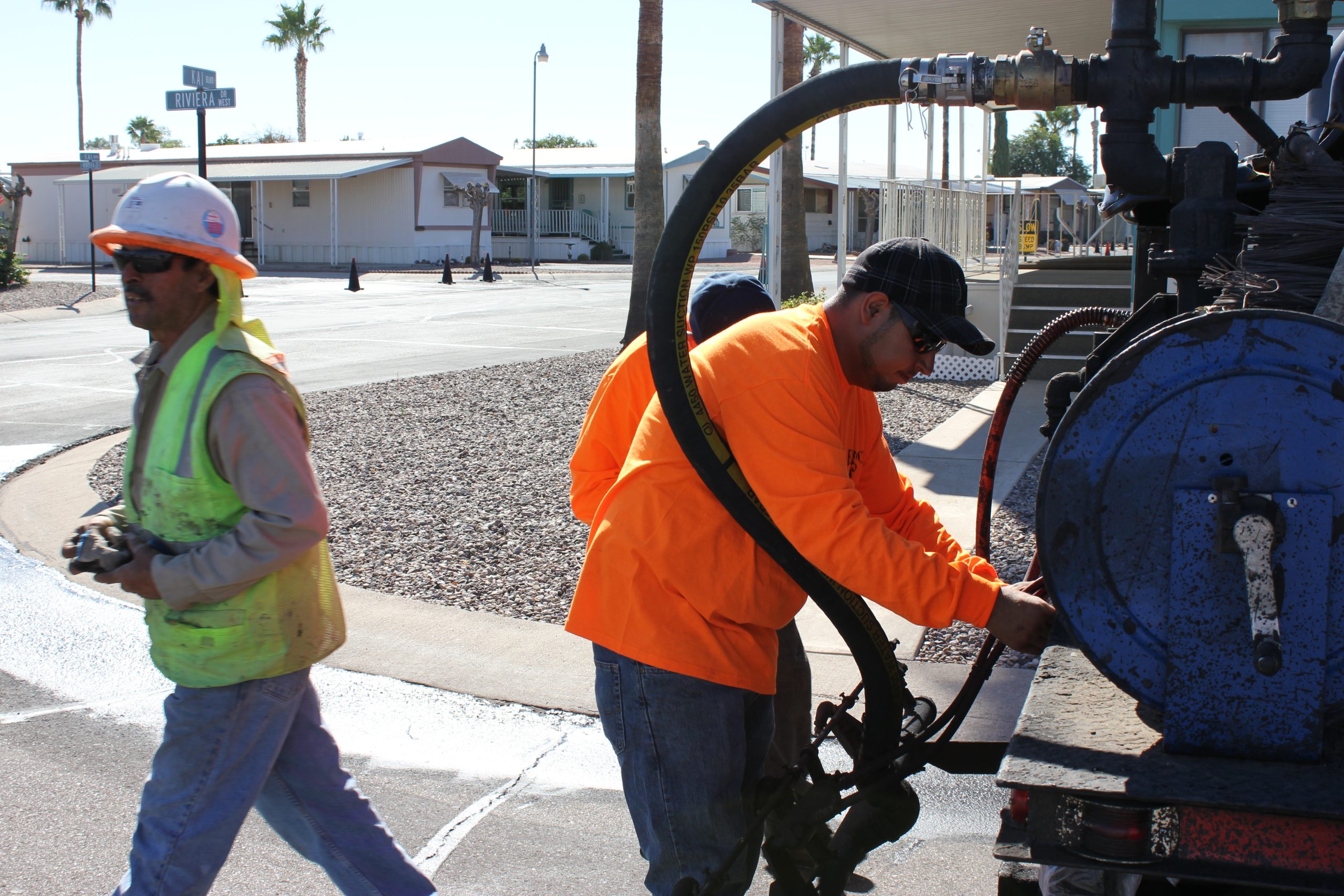 Civil construction is equipment-intensive work. The machines used determine the speed, precision, and cost of every phase of the project. Common civil construction equipment includes:
Excavators – Multi-purpose machines used for trenching, material removal, foundation digging, and site clearing. Excavator size is matched to the scope of work.
Motor Graders – Precision machines that achieve engineered elevation grades for roads, parking lots, and site pads. Modern graders use GPS-guided blade control systems to hit grade targets within fractions of an inch.
Compactors – Vibratory and static compactors achieve required soil and base densities. Compaction testing is performed throughout the process to verify results meet specification.
Bulldozers – Used for bulk material movement during clearing and rough grading phases. Dozers push large volumes of soil efficiently over the site.
Water Trucks – Essential in Southern Arizona for dust control compliance and for moisture-conditioning soil before compaction.
A civil construction contractor’s equipment fleet and maintenance program directly affects project outcomes. Reliable, well-maintained equipment finishes projects on schedule without costly breakdowns mid-project.
How Do You Choose the Right Civil Construction Contractor for Your Project?
Selecting the right civil construction contractor involves evaluating experience, equipment, local knowledge, and track record. Look for contractors who have completed similar projects in size and scope, who understand local regulations and permitting, and who can provide references from recent work in your area.
Licensing and insurance are baseline requirements. In Arizona, contractors must hold a valid license through the Arizona Registrar of Contractors. The ROC’s contractor license search tool lets you verify a contractor’s current license status and classification before signing any contract. Civil work falls under different license classifications than general construction, so verify that the contractor’s license applies to site work, excavating, and paving.
Ask about project management capacity, specifically how projects are scheduled, who is the on-site supervisor, and how communication is handled with the project owner. Civil construction requires close coordination between the contractor, project engineers, inspectors, and other trades. A contractor who communicates proactively and documents their work reduces conflicts and delays.
What Should a Civil Construction Project Budget Include?
Civil construction budgets need to account for more than just grading and paving. A complete civil budget for a commercial project typically includes mobilization and equipment costs, clearing and demolition, earthwork covering both cut and fill volumes, drainage system materials and installation, utility trenching and pipe bedding, base course materials and compaction, paving and concrete materials and installation, permitting fees, and inspection and testing costs.
Testing and inspection, including compaction testing, material certifications, and survey verification, are often underestimated in early project budgets but are required by municipalities and project engineers before work is approved. Including these costs from the beginning prevents budget surprises during construction.
Partner With an Experienced Civil Construction Contractor in Southern Arizona
Civil construction is complex, regulated, and foundational to every development project. Choosing a civil construction contractor with deep experience in Southern Arizona’s terrain, climate, and regulatory environment is one of the most important decisions a developer or property owner makes.
At Eagle Rock Excavating, we’ve built a reputation for quality civil work across Tucson and the surrounding region, from commercial site preparation and storm drainage to paving and concrete.
Visit our services page to learn more about our capabilities, or browse our portfolio to see our civil construction work across Southern Arizona. Contact us to talk about your upcoming project and get a conversation started with our team.


