
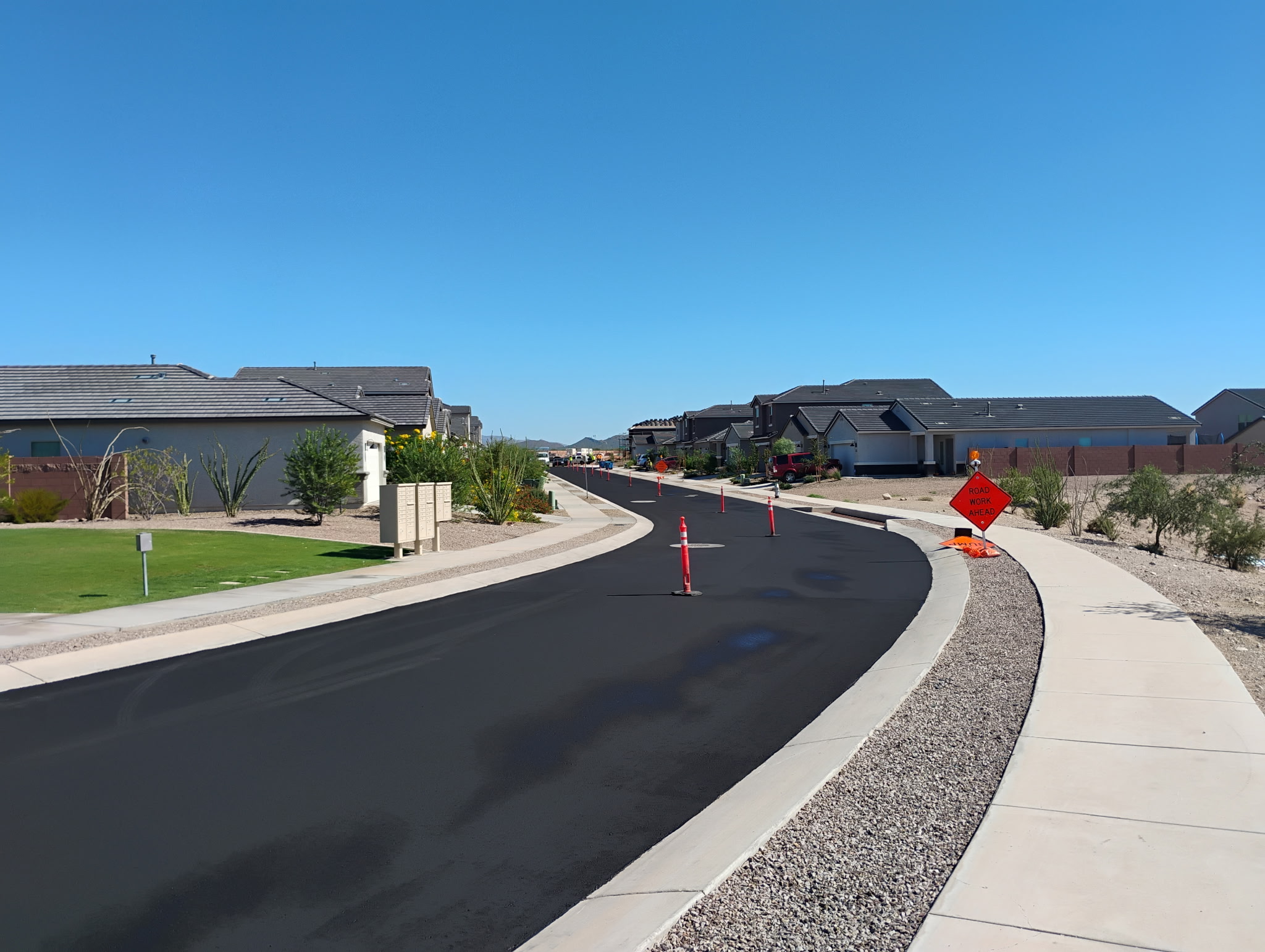
Seal coating vs asphalt replacement is a question we get asked regularly, especially from commercial property owners trying to figure out the most cost-effective way to maintain their pavement.
The two are very different in scope, cost, and what they actually fix, and choosing the wrong option can cost you more in the long run.
Seal coating is a protective surface treatment, while asphalt replacement addresses structural failure from the ground up. Understanding the difference helps you make a smarter decision for your property.
Here is a clear breakdown of what each option involves and when one makes more sense than the other.
What Is Seal Coating and What Does It Actually Do?
Seal coating is a liquid surface treatment applied over existing asphalt to protect it from UV damage, water infiltration, and everyday wear. It works by sealing small surface pores, slowing oxidation, and giving the pavement a clean, dark finish that holds line markings better. It does not add structural strength or fix cracks that have already formed in the base.
Think of seal coating the way you would think of applying sunscreen. It protects what is already there, but it cannot repair damage that has already occurred. For pavement that is still structurally sound, a seal coat applied every two to three years can significantly extend its useful life.
Regular preventive maintenance including seal coating can extend pavement life by protecting the binder from UV degradation. In Southern Arizona, where UV intensity and heat are extreme, that protection is especially relevant. Oxidation happens faster here than in most other parts of the country.
What Does Full Asphalt Replacement Involve?
Full asphalt replacement means removing the existing pavement down to the base layer, repairing or rebuilding the base as needed, and installing a new asphalt surface. It is the right approach when the pavement structure has failed, not just the surface. This is a more involved and more expensive process, but it is also the only real fix for pavement that has deteriorated beyond surface-level repair.
Here is what a full asphalt replacement project typically involves:
- Removal of the existing asphalt by milling or full-depth excavation
- Base inspection to identify soft spots, failed sections, or drainage issues
- Base repair or reconstruction before any new asphalt is placed
- New asphalt installation in the correct depth for the intended load
- Compaction and finishing to ensure a smooth, stable surface
- Line striping to restore markings and ADA-compliant layout
How Do You Know Which One Your Pavement Actually Needs?
The condition of the existing pavement is the deciding factor. Seal coating is appropriate when the asphalt is structurally sound, the surface is showing oxidation or minor surface wear, and there are no significant cracks or base failures. If the pavement has reached that point, a seal coat is a cost-effective way to protect and extend it.
Full replacement becomes necessary when you are dealing with alligator cracking, widespread potholing, significant base failure, or pavement that is simply too old and brittle to respond to surface treatments. Applying a seal coat over failed pavement does not fix the underlying problem. It masks it temporarily and often leads to more expensive repairs down the line.
We assess pavement condition based on the extent of cracking, the stability of the base, drainage performance, and the age of the existing surface. In many cases, the answer falls somewhere in between, where targeted patching combined with seal coating can extend the life of a lot without the full cost of replacement. We will always give you an honest read on what actually makes sense for your situation.
What Is the Cost Difference Between the Two Options?
Seal coating is significantly less expensive than full asphalt replacement, which is part of why property owners sometimes reach for it when replacement is actually what is needed. The cost difference can be substantial, and it is easy to see why a lower upfront number is appealing. But applying a seal coat to failing pavement is money spent on a temporary fix, not a solution.
The Federal Highway Administration notes that preventive maintenance treatments like seal coating are most cost-effective when applied to pavement that is still in good condition, not as a response to advanced deterioration.
The value of seal coating is in preserving good pavement, not in recovering pavement that has already failed. Timing matters as much as the treatment itself.
Can You Seal Coat After a Full Replacement?

Yes, and we often recommend it. A newly replaced asphalt surface benefits from a seal coat applied after the pavement has had time to cure, typically six months to a year after installation. This protects the fresh surface from the start and sets up a regular maintenance cycle that extends the life of the new pavement.
In Southern Arizona, starting that maintenance cycle early makes a real difference. The combination of intense UV radiation and heat that the region experiences accelerates oxidation even on new asphalt. A seal coat applied at the right time can slow that process significantly and reduce how often you need to invest in more substantial repairs.
How Does Southern Arizona’s Climate Affect This Decision?
The climate here changes the calculus compared to cooler, wetter parts of the country. Extreme heat softens the asphalt binder during summer, while the UV exposure causes oxidation year-round. Then monsoon season brings sudden heavy rainfall that exploits any existing cracks or drainage weaknesses. This cycle puts more stress on pavement than most property owners realise.
The National Weather Service records Tucson’s average July high above 100°F, with intense solar radiation contributing to surface temperatures well above that. Under those conditions, asphalt that is not protected by a seal coat oxidises and becomes brittle much faster. For commercial properties in Southern Arizona, a proactive seal coating schedule is not optional maintenance, it is practical asset management.
What Are the Most Common Mistakes Property Owners Make?
In our experience, the two most common mistakes are waiting too long to seal coat and using seal coating as a substitute for replacement when the pavement has already failed. Both decisions end up costing more than a well-timed approach would have. Here is a breakdown of what we see most often:
- Skipping seal coating on sound pavement and allowing oxidation to advance unchecked until the surface becomes brittle and starts to crack. At that point, what could have been a simple maintenance treatment turns into a much larger repair or replacement job.
- Seal coating over alligator cracking or base failure instead of addressing the structural issue first. The surface may look better temporarily, but the pavement underneath continues to deteriorate and the problem resurfaces quickly.
- Delaying full replacement until damage is so extensive that the base also needs complete reconstruction, which adds significant cost to what could have been a more straightforward project.
- Not fixing drainage problems before repaving or seal coating. Water that cannot drain properly will find its way into the pavement structure and cause premature failure regardless of how good the new surface is.
- Choosing the lowest bid without understanding what is actually included in the scope of work. A lower price that skips proper base preparation or uses substandard materials will cost more to fix later than a well-executed job would have cost upfront.
Getting the timing right and understanding what your pavement actually needs will save you money over the life of the asset. A straightforward site assessment from an experienced contractor is the best place to start.
Make the Right Call for Your Pavement
Understanding seal coating vs asphalt replacement comes down to one question: is your pavement structurally sound, or has it failed?
If it is sound, protect it with regular seal coating and planned maintenance. If it has failed, seal coating is not the answer and a full replacement is the more practical investment.
At Eagle Rock Excavating, we work with commercial property owners, developers, and contractors across Southern Arizona to assess pavement condition and recommend the right scope of work.
If you are ready to get your site assessed, reach out to our team, and we will give you a straight answer on what your pavement needs.


